

You and your competitors operate in a market shaped by globalization, remote work, AI adoption, and rapidly shifting expectations. In this environment,
strategic leadership
is one of the most important determinants of whether a business grows, adapts, or falls behind. It is no longer enough for C-level managers to operate tasks or stabilize workflows. Today, they are expected to guide their teams through uncertainty and build resilient structures that can evolve over time.
Today, we explore strategic leadership, its real-world examples, core skills, long-term frameworks, and its role in the 2026 tech sector. We also talked with MWDN leaders: Managing Partner Vitalii Vystavnyi and COO Mike Merkulov, on how strategic leadership looks inside a modern company that provides IT services.

What strategic leadership really means in tech
Leaders in software development operate in an environment where decisions about architecture, hiring, or AI adoption can determine the fate of a company for years. Unlike operational leadership, which focuses on execution, strategic leadership is concerned with direction, systems, alignment, adaptation, and long-term value. It’s the leadership that forms the backbone of companies capable of scaling without collapsing into debt or cultural decay.
A practical
strategic leadership definition
for tech teams is this:
Strategic leadership is the ability to set a long-term direction for a company, make disciplined decisions that balance current delivery with future scalability, and align cross-functional teams around shared outcomes.
In this context,
strategic leadership includes all of the following except
day-to-day task supervision. It does not mean micromanaging Jira boards or rewriting pull requests. Strategic leaders focus on systems, architecture, and culture, not checklists, isolated features, or momentary productivity spikes.
Why strategic leadership matters in 2026
The past few years introduced pressures that no leadership model from the 1990s or 2000s was designed for. AI accelerates both progress and failure. Distributed engineering teams replace centralized offices. Hiring becomes global and deeply competitive. Customers expect rapid value delivery. Security and compliance expand from technical concerns into core business risks.
In this environment, companies without strong strategic leadership experience predictable pain points: inconsistent delivery, architectural instability, team burnout, and “directional drift” where departments work hard but not together. Meanwhile, companies that invest in strategic public relations,
strategic marketing leadership
, and strategic talent acquisition build resilience. They make decisions earlier, adapt faster, and maintain coherence across borders and time zones.
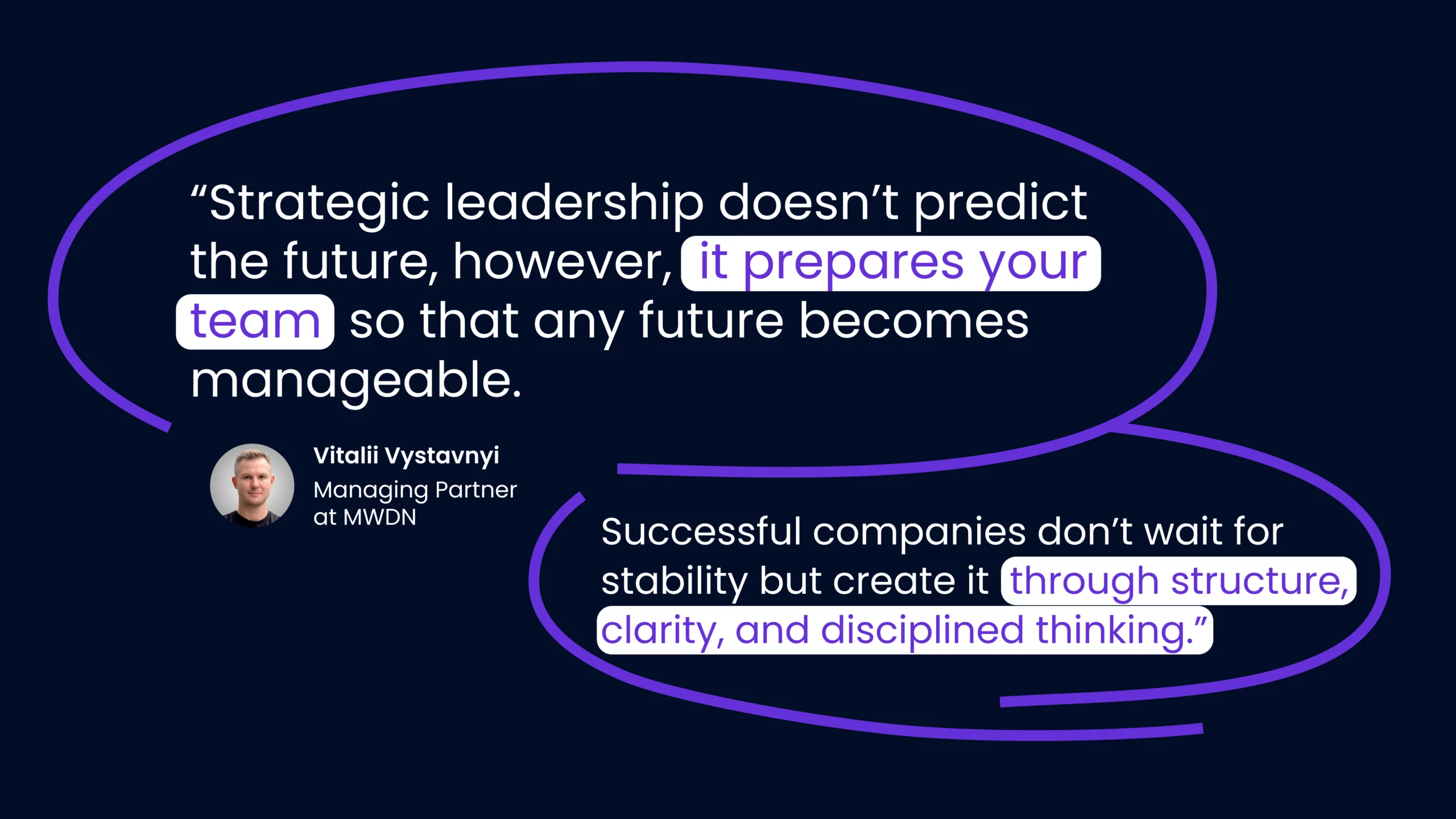
MWDN Managing Partner Vitalii Vystavnyi explains:
This applies equally to startups reinventing their product, scale-ups building their first global team, or enterprises modernizing legacy systems.
Strategic leadership vs strategic thinking
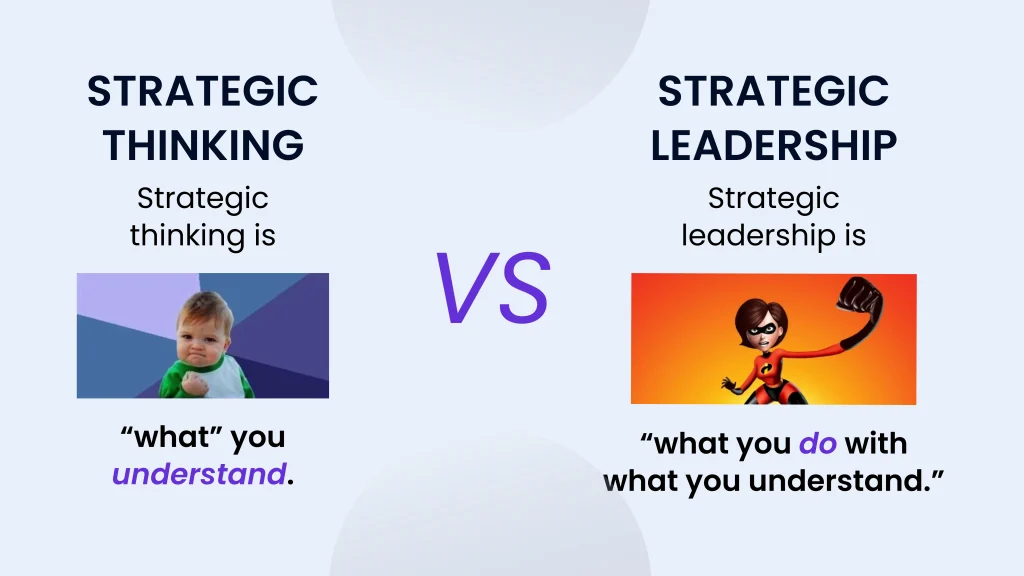
Strategic thinking is cognitive. It’s the ability to analyze patterns, forecast outcomes, and see the system at large. It is also behavioral, as it requires converting thinking into organizational movement. A CTO, VP of Engineering, or product director may think strategically but still fail to lead strategically if they cannot align people, communicate priorities, or influence structure.
How leaders operate in tech companies
Pay attention to software development or IT service companies that maintain stability during rapid growth. You will see them sharing recognisable leadership behaviours:
- They communicate the purpose behind decisions
- They structure teams around product domains and long-term ownership
- They choose architectures for scalability instead of convenience
- They integrate AI in a way that supports and not replaces expertise
- They evaluate decisions through risk and not just urgency
- They ensure teams understand the broader system and business needs, not just their local tasks
And importantly, they avoid over-relying on checklists or short-term KPIs. A strategic leader’s value is not measured in how many meetings they run or how many tasks they approve, but in the clarity and stability they create.
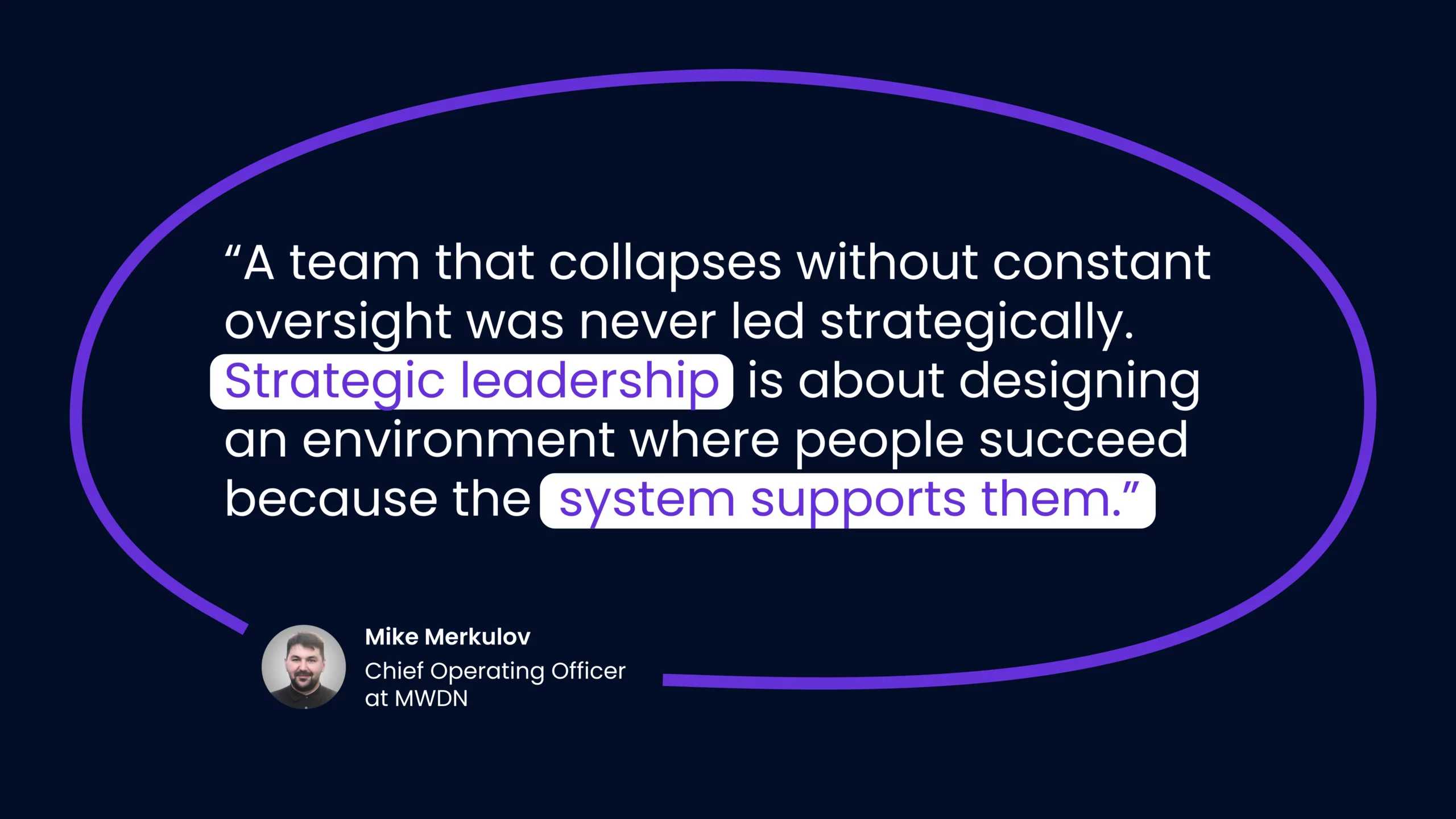
MWDN COO Mike Merkulov puts it this way:
Strategic leadership examples
Here are some examples to make the otherwise speculative concept clearer.
- AI integration in engineering workflows.
When adopting AI tools, weak leaders rush to replace tasks, while strategic leaders redesign workflows, upskill teams, define guardrails, and ensure AI supports rather than distorts engineering quality. - Modernizing legacy architecture.
Bad leaders initiate a risky full rewrite. Strategic leaders conduct architectural mapping, evaluate risks, build modernization in phases, and preserve business continuity. - Global hiring and distributed teams.
Instead of hiring reactively across countries, strategic leaders build capability maps, define responsibility structures, and create communication frameworks that support deep collaboration across time zones. - Product pivoting.
Strategic leaders run scenario planning sessions, analyze market opportunities, and make calculated decisions that balance innovation with operational continuity.
Key frameworks every tech leader should use
Strategic leadership training often emphasizes frameworks because they reduce uncertainty and support structured decision-making. These frameworks appear consistently in all educational training on leadership because they work:
- SWOT. Used to evaluate product directions, architectural decisions, or market entry.
- PESTLE (Political, Economic, Social, Technological, Legal, Environmental). Essential for companies entering regulated industries or developing AI-driven products.
- OKRs. The foundation for alignment in product and engineering teams.
- Scenario planning. Develops multi-path strategies for volatile environments, particularly useful in AI-accelerated markets.
Some leaders learn these methodologies formally through advanced programs like a
doctorate in strategic leadership
or an
MBA with a strategic leadership
concentration, while others develop mastery on the job. But regardless of background, the common factor is structured thinking, not intuition.
The AI era: How leadership itself has changed
AI changes leadership in three fundamental ways.
First, it forces managers and owners to develop AI literacy, not necessarily as engineers but as decision-makers who understand capabilities and risks.
Second, it accelerates outcomes. Poor architectural decisions or unclear communication can now cause exponential damage because AI-generated work amplifies both mistakes and wins.
Third, it redefines roles: junior tasks are automated, mid-level roles shift toward systems understanding, and senior positions require deeper ownership.
This makes strategic leadership even more essential. Leaders must design systems that scale with automation instead of breaking under it.
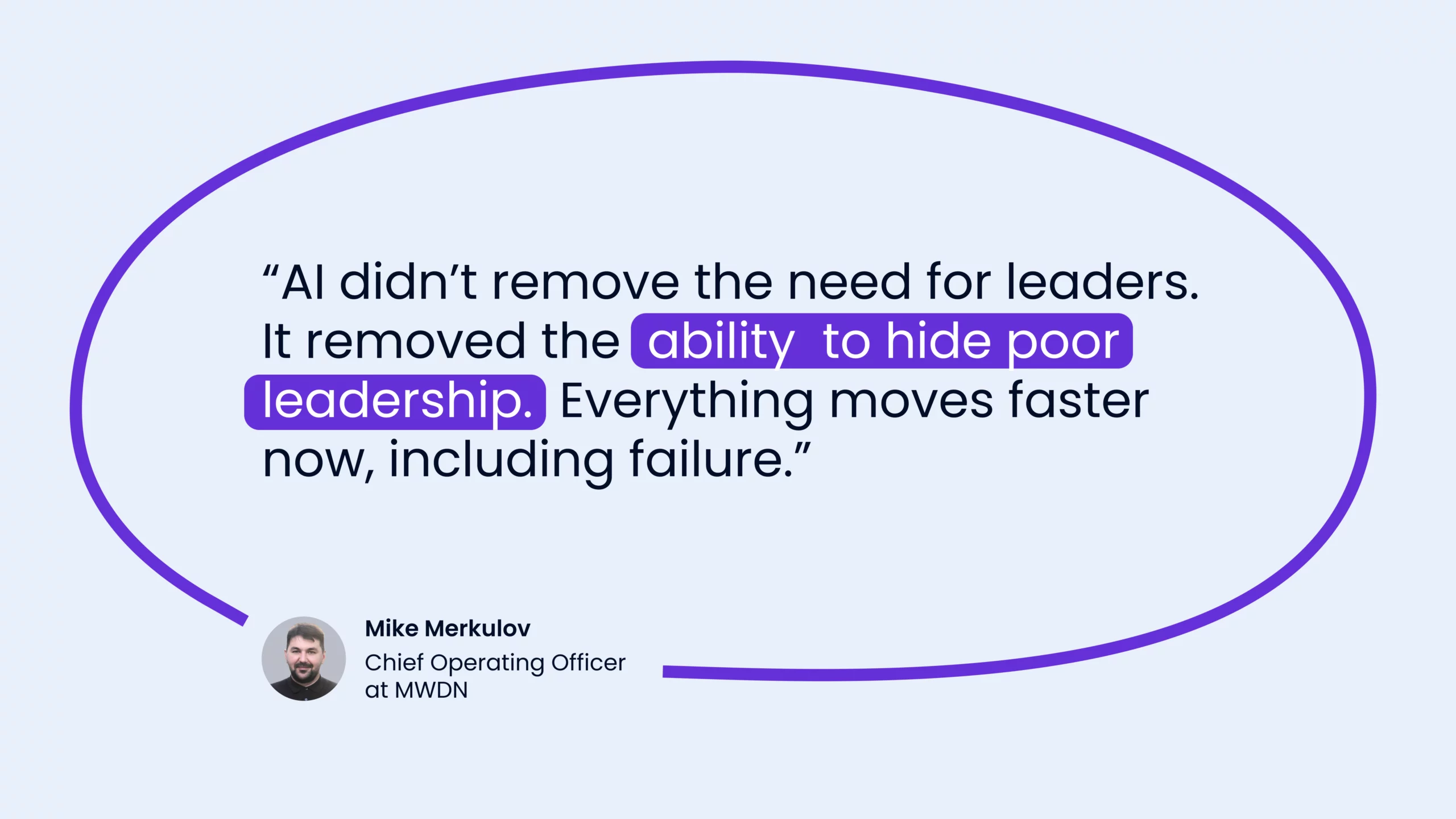
Mike MerkuIov summarizes this shift well:
How tech companies build strategic leadership internally
Organizational development is no longer optional in engineering. Many companies today incorporate principles from
strategic leadership books
or training to build stronger cultures around clarity and purpose.
Companies that succeed usually follow several long-term practices:
- They grow systems thinking early, so developers understand not just code but infrastructure, domain logic, customer journeys, and business objectives.
- They encourage engineers to make autonomous decisions by providing shared context instead of top-down directives.
- They redesign processes around AI with clear expectations, responsibility zones, and documentation.
- They teach communication as a core engineering skill.
- And they promote leaders based on judgment and systems understanding rather than tenure.
This approach ensures that strategic leadership does not become the responsibility of a single C-level but a discipline embedded throughout the team.
The most common mistakes weak leaders make
Even experienced managers fail when they confuse movement with progress. Many struggle because they overemphasize activity – meetings, sprints, velocity – instead of outcomes and clarity. Others avoid difficult tradeoffs, delaying architectural decisions until they become urgent and expensive. Some fail to communicate strategy beyond vague slogans, leaving teams without structure. Others ignore resistance to change, causing friction during transformations such as cloud migration or AI adoption.
But the most damaging mistake, especially common in engineering, is making decisions based purely on urgency. Tech leaders must create processes instead of emergencies.
Strategic leadership training and education paths
Because of the complexity of modern businesses, many aspiring leaders pursue formal education. Strategic leadership has become a standalone discipline with its own academic programs, research, and training tracks. And yes, strategic leadership is not just a management concept. It is a real, formalized field of study taught at universities around the world, with programs designed specifically to prepare leaders for high-stakes technological decision-making.
Formal degree programs in strategic leadership
Several universities offer full
Master’s in Strategic Leadership
programs. These degrees focus on the core capabilities technology leaders rely on every day: systems thinking, change management, organizational communication, innovation processes, and long-term decision models.
Programs such as the MS in Strategic Leadership at St. Bonaventure University or the University of Charleston are well-known examples. These degrees are especially relevant for engineering managers, tech leads, and product owners who must navigate complex team structures and rapid market shifts.
An
MBA with a strategic leadership
concentration is an even more common path in tech. These tracks combine classic MBA disciplines – finance, operations, strategic marketing leadership, analytics – with decision-making frameworks tailored for high-growth, innovation-driven companies. Business schools like Duke, Cornell, Penn State, and ASU offer strategy-focused MBA pathways that are popular among senior software leaders transitioning into executive roles.
For those who aim to influence organizational transformation at scale, there are doctorate-level programs including the
Doctor of Strategic Leadership
and PhD programs with strategic leadership specialization. Universities such as Regent, Liberty, and James Madison offer doctoral programs that focus on long-cycle transformation: culture design, strategic public relations leadership, large-system change, and cross-departmental alignment.
Executive and short-form strategic leadership training
In tech, not everyone needs a graduate degree. Many leaders build their expertise through
strategic leadership training
courses offered by institutions such as MIT Sloan, Stanford GSB, Kellogg, and the Center for Creative Leadership. These programs focus on real-world leadership in engineering-heavy environments: scaling teams, navigating uncertainty, decision frameworks in AI-augmented organizations, and cross-functional alignment.
Self-directed learning: books, research, and practical application
Strategic leadership also grows through independent learning. The field includes hundreds of influential
strategic leadership books
, research papers, and case studies that shape thinking in software development, digital transformation, and AI-driven organizations.
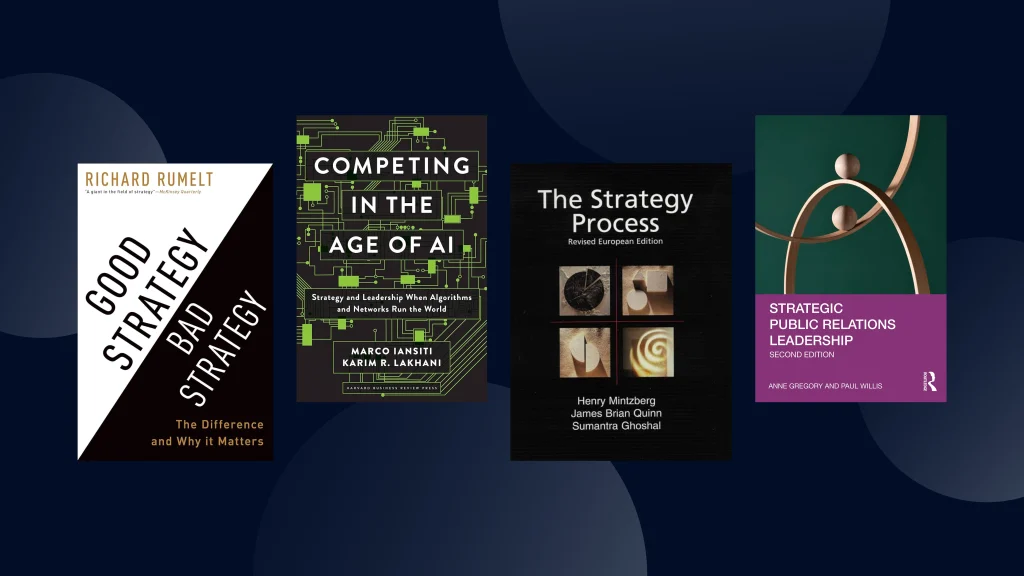
Some notable works include:
- Good Strategy, Bad Strategy (Rumelt). It’s foundational for understanding strategic clarity vs “fluff.”
- Competing in the Age of AI (Iansiti & Lakhani). Increasingly relevant for modern engineering leaders.
- The Strategy Process (Mintzberg). Essential for systems-level thinking.
- Strategic Public Relations Leadership (Gregory & Willis). Key for leaders responsible for communication during change.
There is no single path, but continuous learning is mandatory
One of the defining characteristics of strategic leadership in tech is that no one arrives “fully formed.” The combination of training paths – formal degrees, executive programs, practical strategic leadership examples, and real-world experimentation – is what builds a leader capable of guiding engineering teams through uncertainty.
How MWDN practices strategic leadership
MWDN’s philosophy centers on long-term direction, clarity of responsibility, and the ability to adapt quickly without losing alignment. When building distributed tech teams across Israel, Europe, and the US, strategic leadership is not theoretical but the foundation of our reliability and client trust.
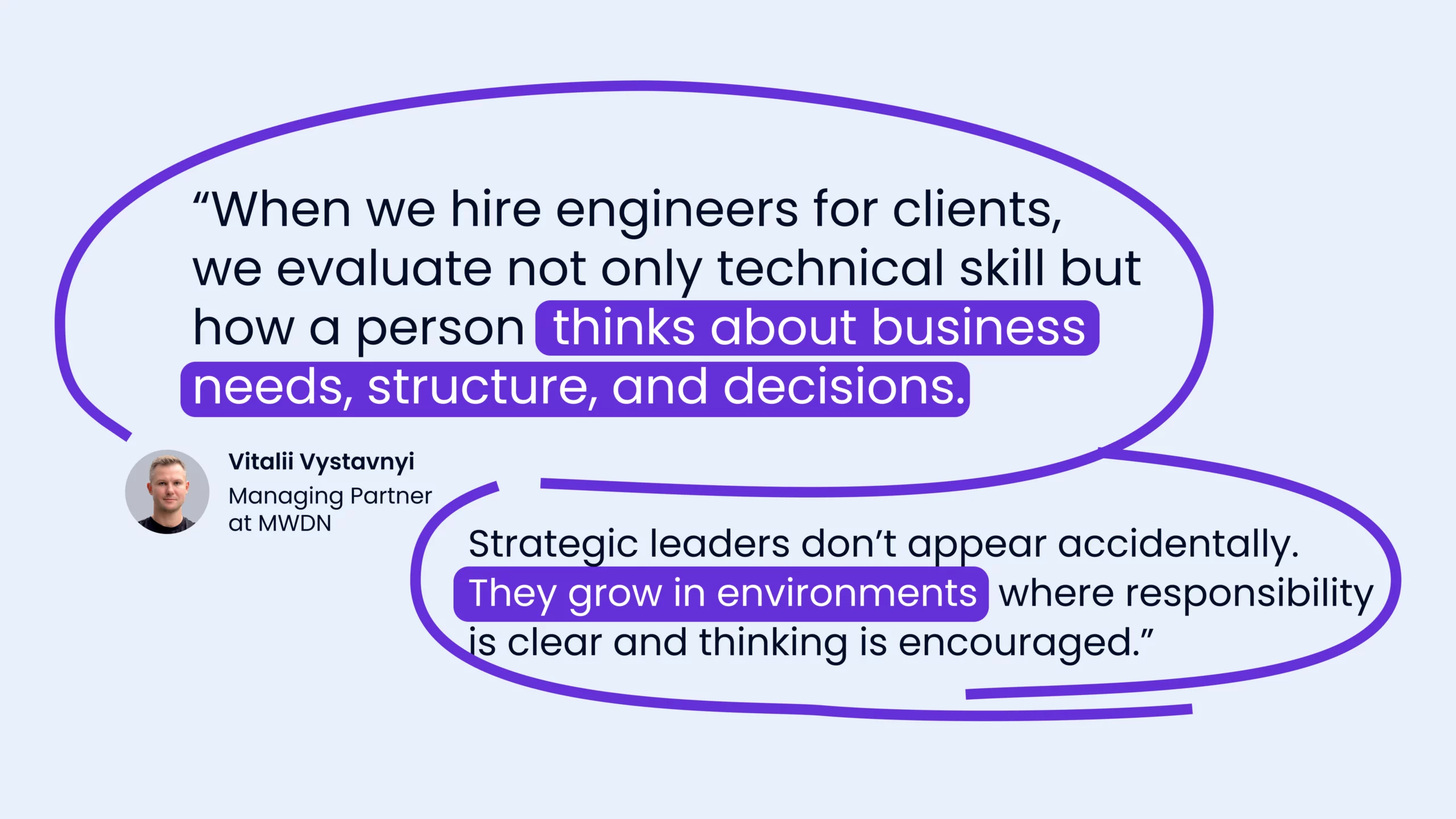
Vitalii Vystavnyi explains:
This perspective guides how MWDN structures teams, mentors engineers, supports AI adoption, and collaborates with clients on multi-year development plans. We don’t just fill roles! We help build companies that last.
FAQ on strategic leadership
- What is strategic leadership?
Strategic leadership is the discipline of guiding an organization toward long-term success through intentional decisions, systems thinking, and alignment across teams. - What is strategic thinking in leadership?
Strategic thinking refers to analyzing patterns, forecasting outcomes, and understanding complex systems. Strategic leadership applies this thinking to real organizational movement. - What are the four strategic leadership types?
The four widely recognized strategic leadership types are Directive, Visionary, Collaborative, and Adaptive leadership. Directive leaders focus on fast, decisive action in high-pressure environments. Visionary leaders set long-term direction and inspire teams around a shared future. Collaborative leaders emphasize cross-functional alignment, trust, and communication to solve complex problems. Adaptive leaders thrive in uncertainty, continuously experimenting, learning, and adjusting strategy, especially relevant in today’s AI-driven tech landscape.