
AI has moved into the everyday development workflow. Engineers now use it to start tasks, write first drafts, create tests, explain old code, check ideas, and turn rough thoughts into something easier to review.
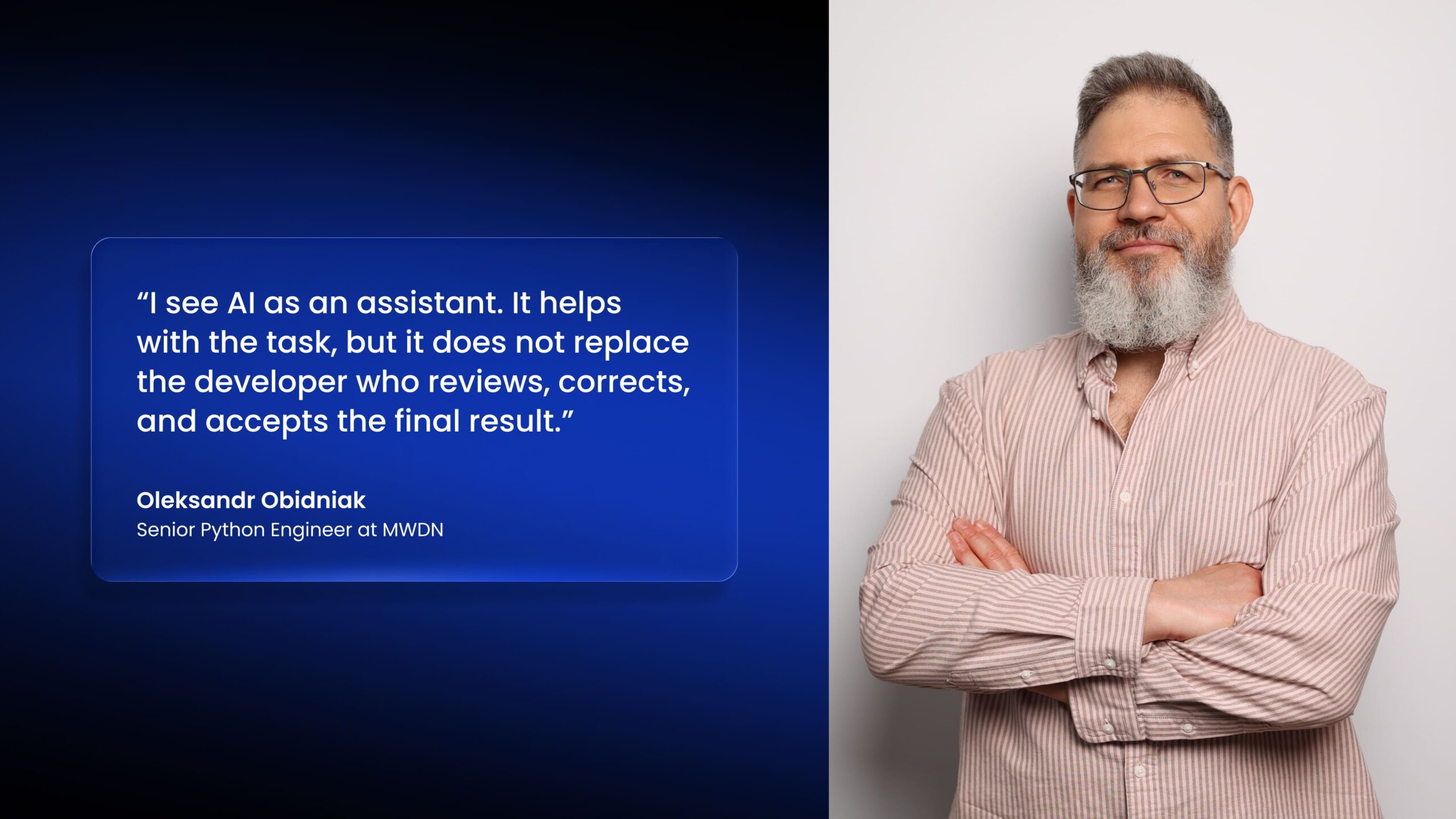
Even with this change, engineers remain just as important. AI can help create the first version faster, but it does not fully grasp the product context, business logic, security risks, or long-term architecture choices. The person reviewing the results is still responsible for deciding what is safe to release.
In 2026, engineering productivity is less about generating more code and more about making technical decisions with enough context, speed, and control.
What changed in daily development work
AI is now most useful at the start of a task. It helps engineers move from a blank page to a first version faster, whether they are writing code, preparing tests, documenting changes, checking an unfamiliar query, or exploring a new topic.
The workflow became more iterative: give AI context, get a draft, review it, correct it, and decide what is ready for the next step. The process is definitely faster, but the final quality still relies on the engineer who checks the work.
Faster first drafts, tests, and documentation
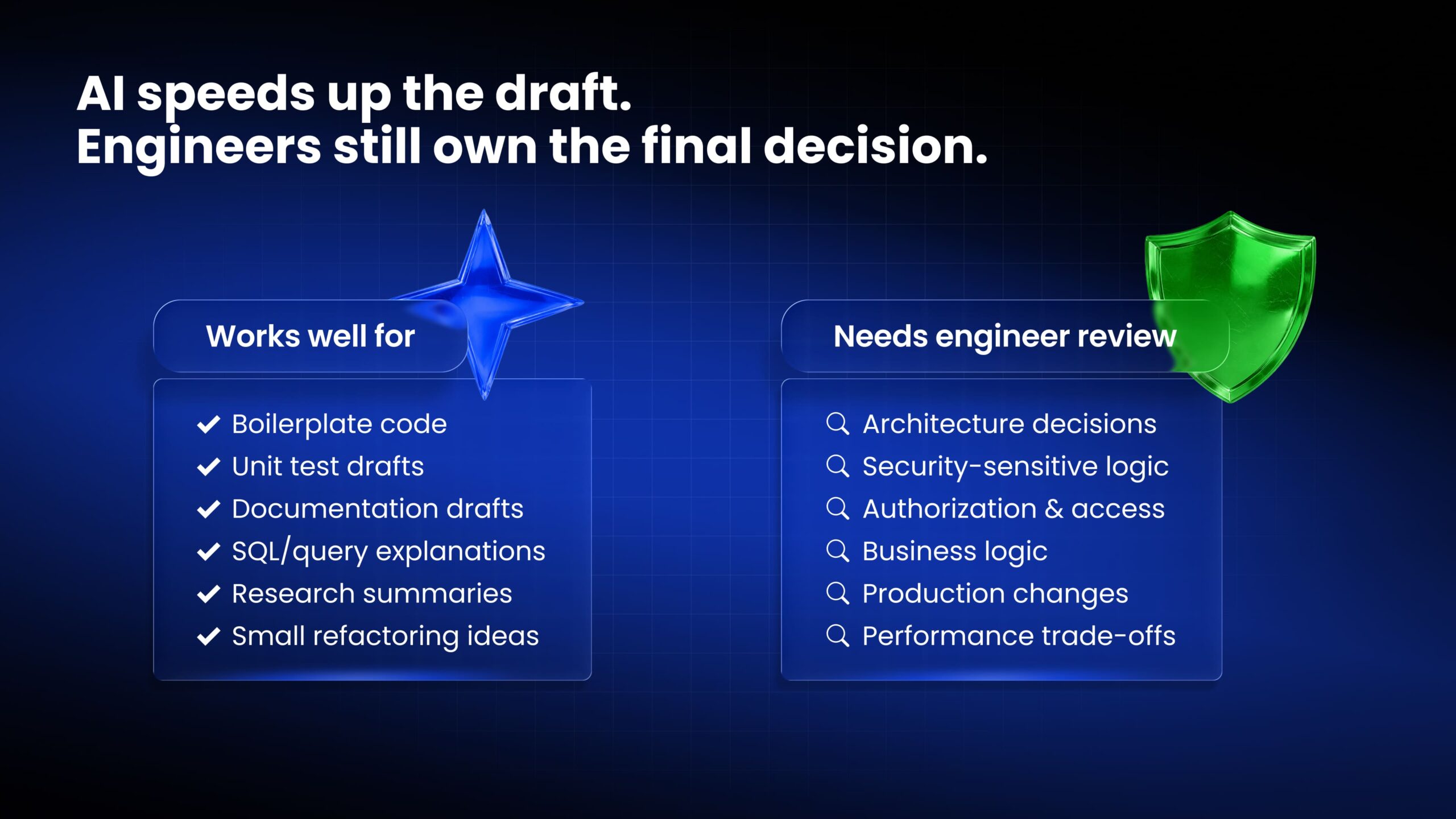
The biggest change is not that AI writes perfect code. It usually does not. The real benefit is that routine parts of development no longer slow the whole process down as much as before.
Instead of spending time on the first rough version, engineers can focus more on logic, edge cases, structure, and product fit.
Better research, but careful validation
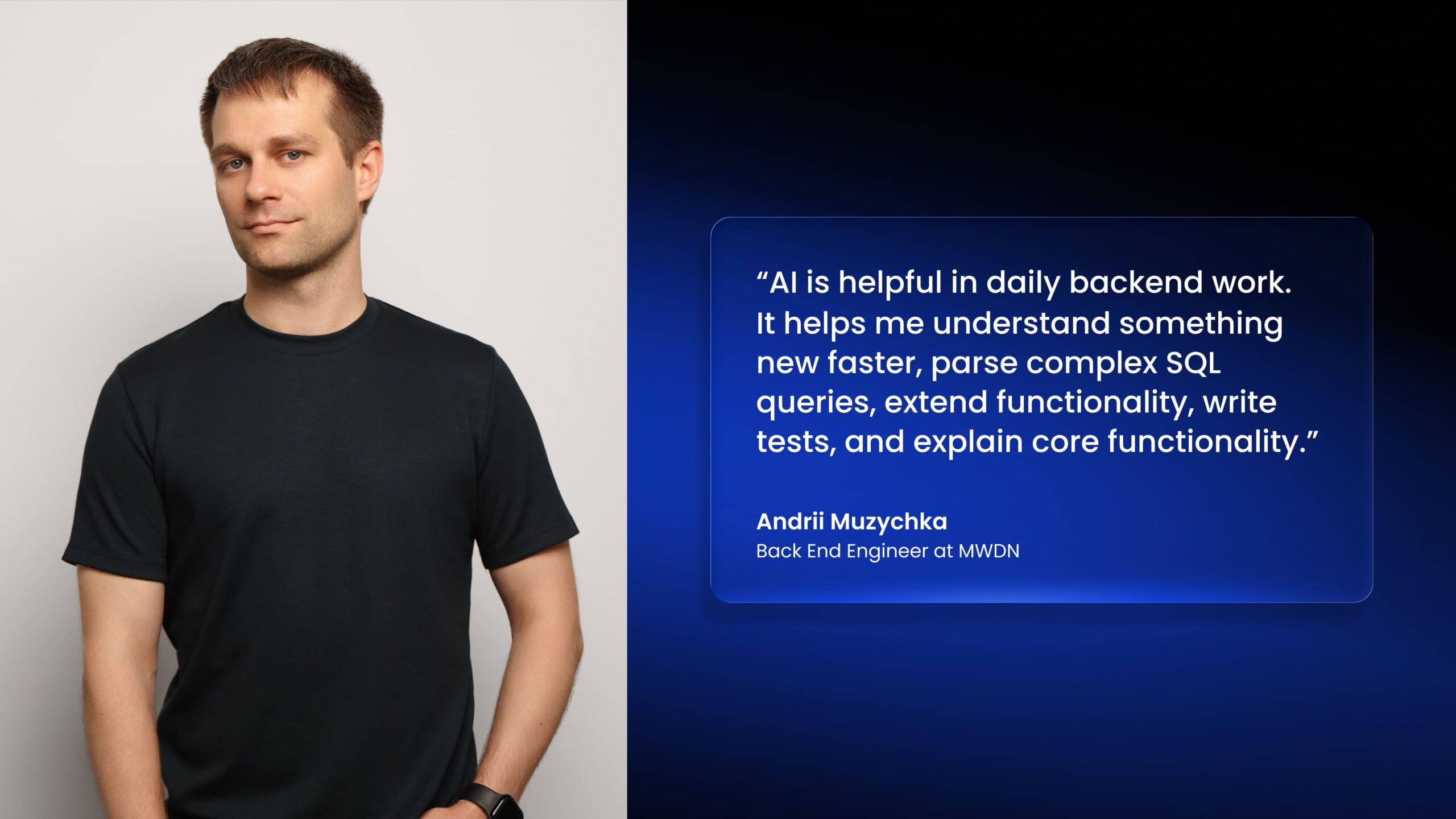
Research also became faster. Engineers can use AI to summarize a topic, compare approaches, explain unfamiliar code, or outline possible solutions. This helps a team learn quickly before deciding on the best path.
But faster research does not mean you should automatically trust it. AI can miss important details or create something that seems right but does not work well in practice. Experienced engineers use it not as a source of answers, but as a tool for checking their thinking.

What AI changed in the engineering market
AI did not stop people from working in software engineering. But it changed what companies want from engineers at different experience levels. It became harder to get started because just saying “I can generate code” is not enough anymore. At the same time, learning became faster for those who used AI to understand ideas, fix errors, and create projects they could talk about.
Before AI, junior engineers were often evaluated by course completion, basic syntax, simple tasks, and general tool familiarity.
Now, that is no longer enough. Companies expect juniors to show solid engineering fundamentals, explain their decisions clearly, debug with confidence, and present projects they can actually defend.
For senior engineers, the shift is different.
Before AI, seniority was mostly judged by experience, architecture ownership, code review, and delivery responsibility.
Now, senior engineers are expected to combine that experience with AI-assisted speed, stronger risk control, better validation, and product-level judgment. AI can help them move faster, but the real value is still in knowing what is safe, useful, and worth shipping.

What businesses should expect from AI-assisted development
AI can help software teams work faster, but not by making the same product for half the cost. Its true benefit is practical: spending less time on repetitive tasks and more time on important decisions that shape the product.
AI helps teams move faster through quicker prototyping, research, documentation, and testing, allowing engineers to spend more time on architecture, security, business logic, and other decisions that directly affect product quality.
The best results happen when AI is used with clear limits: create the first version, help with research, recommend the test, but let the team make the final choice.
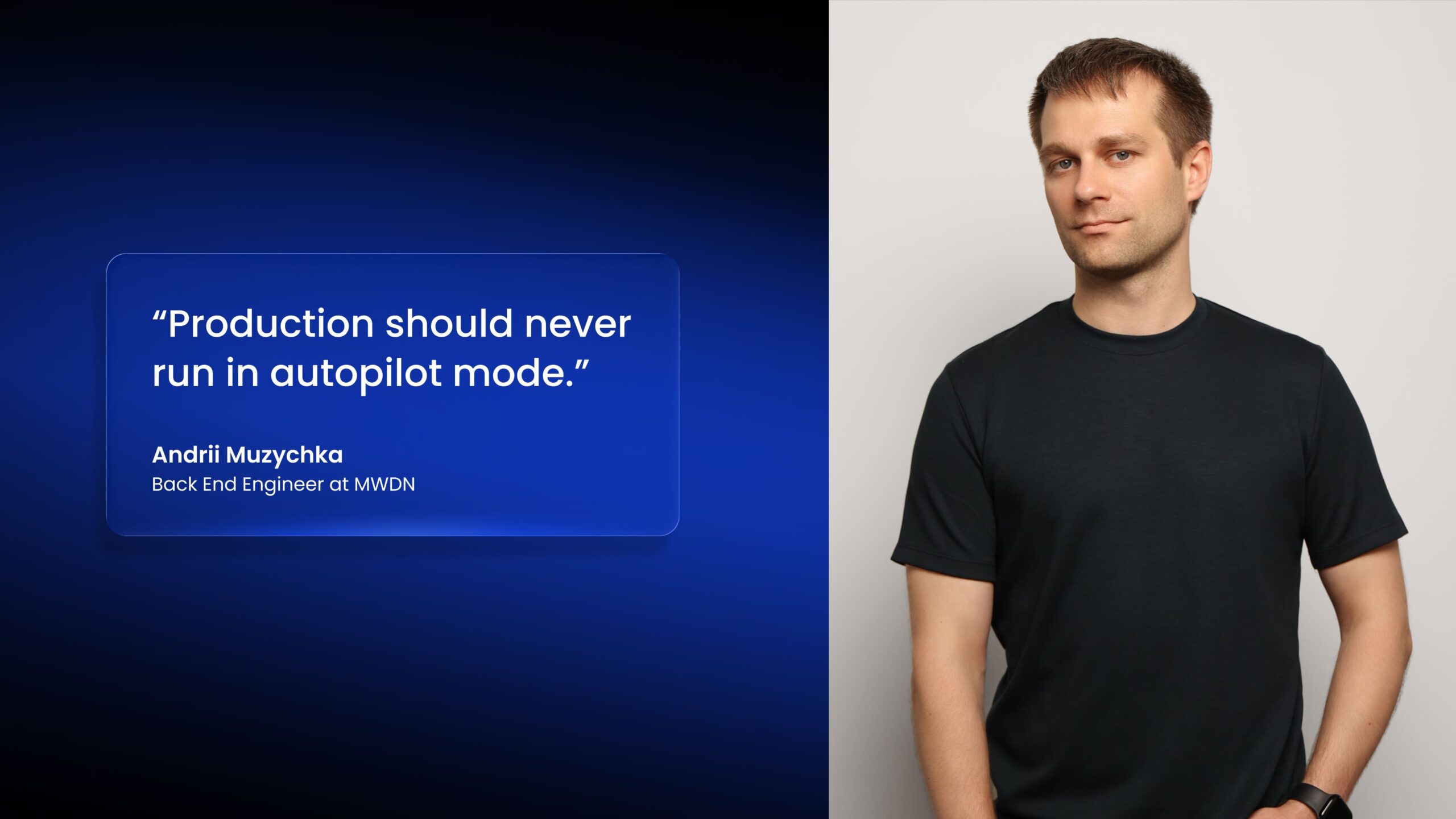
For businesses, the main question is not if engineers use AI, but if they use it carefully, with the right background, checking, and responsibility.
Advice from MWDN engineers: how to stay valuable
If you are new to IT, AI can help you learn faster. However, it is important not to use it as a shortcut past the basics. The engineers who benefit most from AI use it to understand ideas, check their reasoning, and create projects they can clearly explain.
Here is what matters most now:
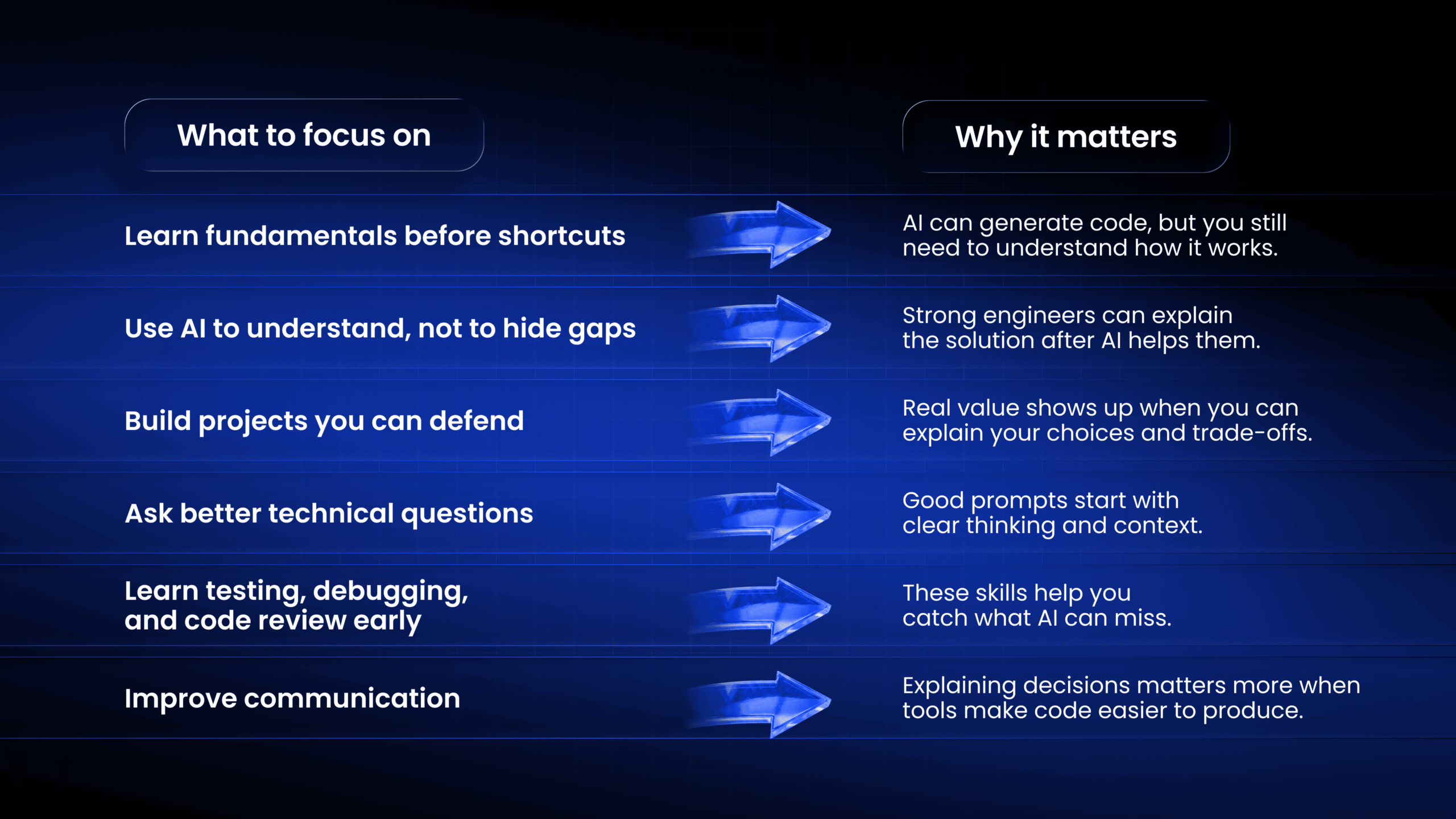 According to Yurii Myts, Team lead & Golang developer at MWDN, AI can support engineers in their work, but it does not remove the need to think clearly and know how to guide the tool with good prompts.
Team life: talking about AI offline in Lviv
The advice above did not come from a trend report or a generic “future of work” discussion. It came from live conversations with MWDN engineers about how AI is already changing their daily work.

This month, part of the MWDN team met in Lviv. It was a chance to work together, spend time outside regular calls, and talk about what AI actually changes in development: where it helps, where it fails, and where human judgment still matters most.
For a remote-first team, offline conversations like this help exchange context faster. They give space for honest answers, practical examples, and small details that rarely appear in formal surveys.
This June edition is partly built around those conversations: practical, direct, and close to how engineers actually work today.
We will also continue this topic on MWDN Instagram, where we are preparing a short video series with more detailed thoughts from our engineers on how they use AI, what they trust it with, and what they still prefer to check themselves.
Final thoughts
Across all the conversations, one idea came up again and again: AI is most useful when it helps engineers understand context faster. This is especially valuable in large or legacy projects, where the hardest part is not always writing new code, but understanding existing logic, dependencies, business rules, and the reasons behind past decisions.
That context matters because AI can suggest code, tests, refactoring options, documentation, or even suspicious parts in a pull request. But it still needs an engineer who can check business logic, transactions, security, performance, and long-term maintainability.
“AI is a great assistant, but the final responsibility is still on the developer.”
This may be the simplest way to summarize AI-assisted development in 2026.
If you are building an international tech team in 2026, it is not enough to ask whether engineers use AI. It is more important to understand how they use it, how they validate results, and how much ownership they can take.
Sometimes one short conversation is enough to review your current team setup, spot where AI-assisted workflows can help, and understand which engineering skills matter most for your next stage of growth.
If you’d like to discuss your hiring plans or compare different team setup options, feel free to book a time that works for you: https://cal.link/6WU7nXK