

AI has changed the first stage of the hiring process. A few years ago, a CV usually gave recruiters a fairly quick sense of a candidate’s background, focus, and level of experience. Today, even an average profile can look clean, relevant, and well prepared for the role.
For international hiring teams, this makes sourcing more complicated. A strong CV or LinkedIn profile no longer proves that the person has the experience to back it up. That is why this month, we asked Anastasiia Mushak, Talent Sourcing Lead at MWDN, to share how her team assesses what lies behind a polished profile and how they distinguish real expertise from AI-generated confidence.
Why early candidate screening became harder in 2026
Recruiters should first look for any gap between how a profile appears and the actual experience behind it. A CV might list AI tools, cloud platforms, automation, architecture, or security, but these words alone do not show how the person used them in real work.
As such, reviewing profiles requires new context. Sourcers should determine a candidate’s role on projects, their level of responsibility/ownership, the team’s dynamics, and whether the candidate can articulate their rationale/decision-making in their own terms.
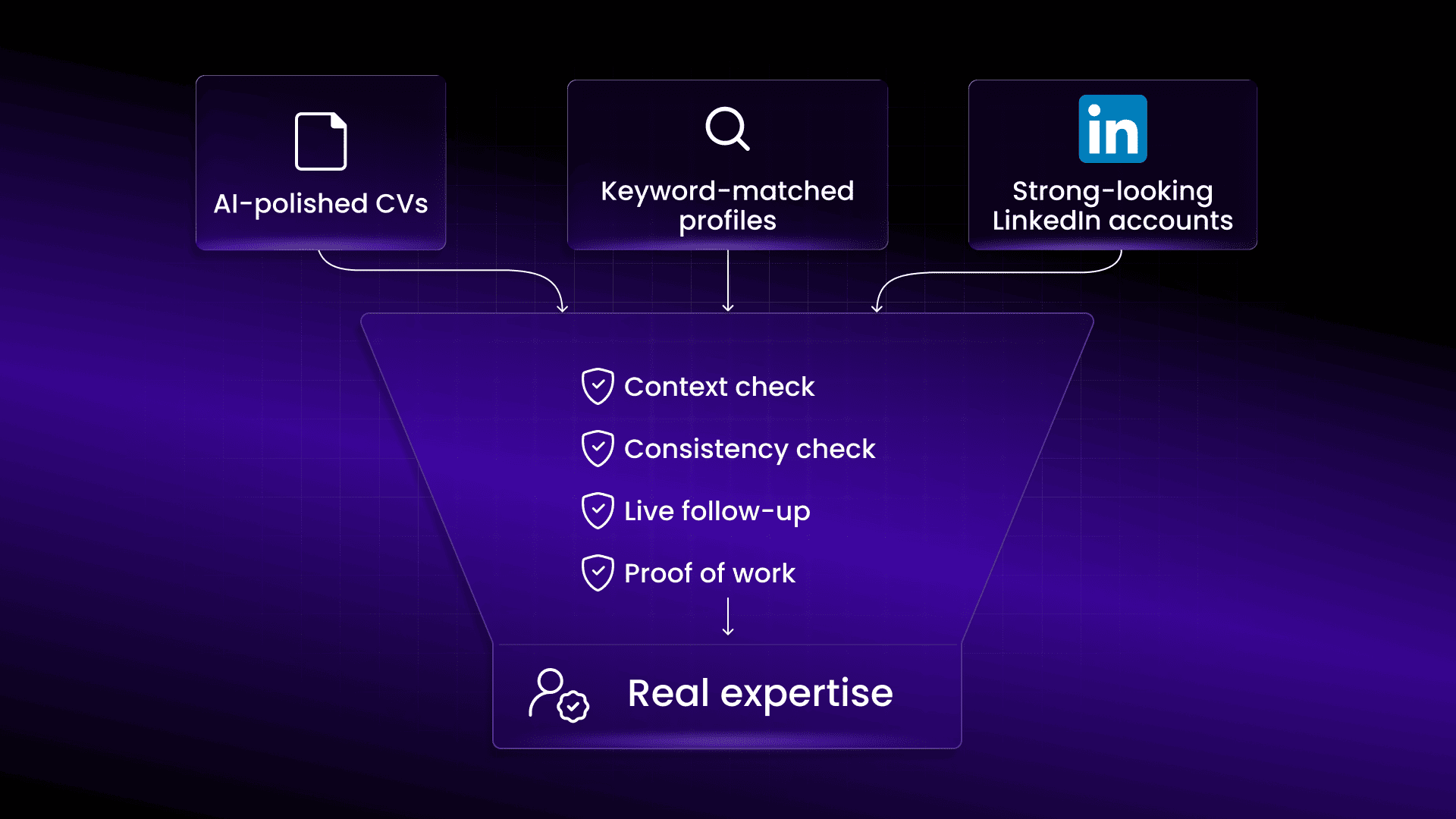
Some trends regarding sourcers and recruiters are:
▶️ CV details matter more than CV structureIt is much easier to read a CV with clear formatting; however, the candidates who can provide the best insight into their past projects, responsibilities, and results are those who will be valued most.
▶️ LinkedIn consistency matters more than profile polishWhile a recruiter wants to see a profile that has been completed accurately, they will look for consistency in the career history, public activity, description, and real work examples.
▶️ Screening calls need less script and more follow-upSince scripts can be rehearsed, recruiters should ask candidates to share examples from their lives of situations, decisions, mistakes, and trade-offs to assess their strengths in these areas.
▶️ AI experience needs contextIt is not enough to say that someone “used AI.” The important part is where they used it, why they used it, and what changed in the workflow because of it.
At MWDN, when we review candidates early in 2026, our main focus is to check that their experience is strong before asking the client to interview them. Matching a profile to a job description is less important at this stage.
Inside MWDN sourcing: insights from Anastasiia Mushak
To see how this works in real situations, we spoke with Anastasiia Mushak, Talent Sourcing Lead at MWDN. She explained what her team looks for before sending a candidate to a client.
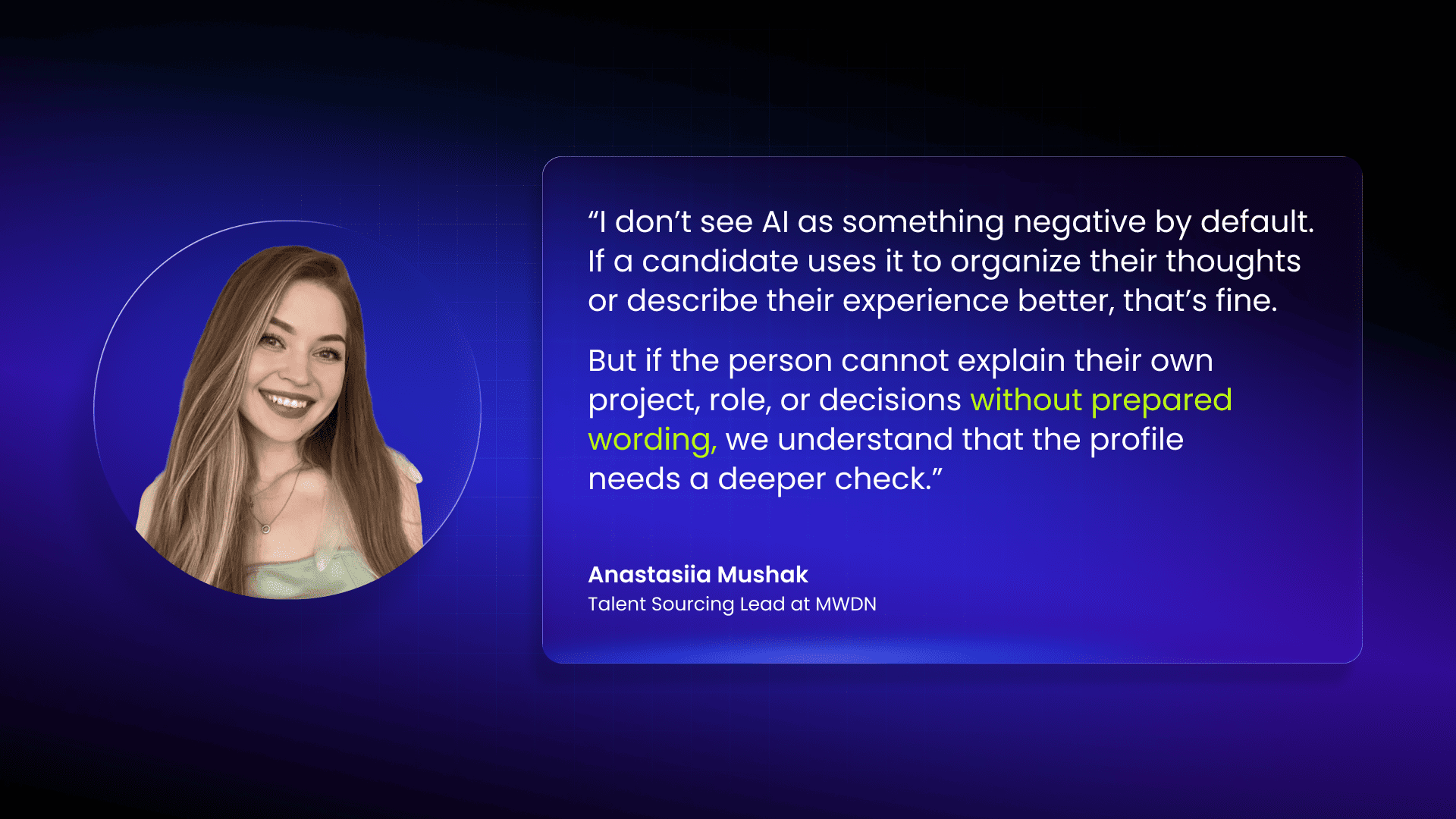
The sourcing team at MWDN goes far beyond a well-designed CV or keyword matching to determine how well an individual may be a fit for an open position.
They use LinkedIn, CVs, project background, public presence, and early communication to check whether the candidate’s story is consistent.
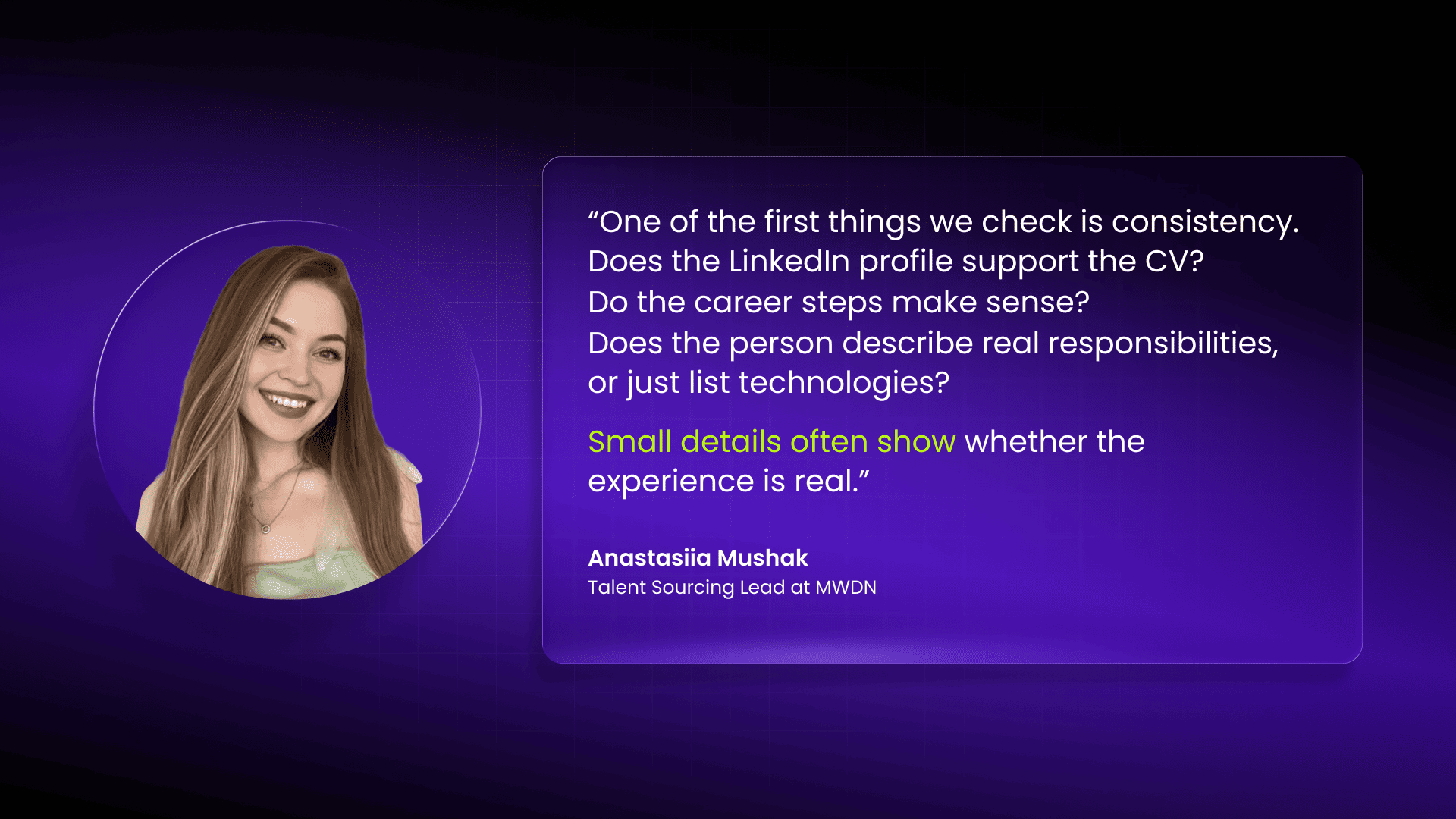
The switch from general responses to concrete examples makes this distinction much clearer.
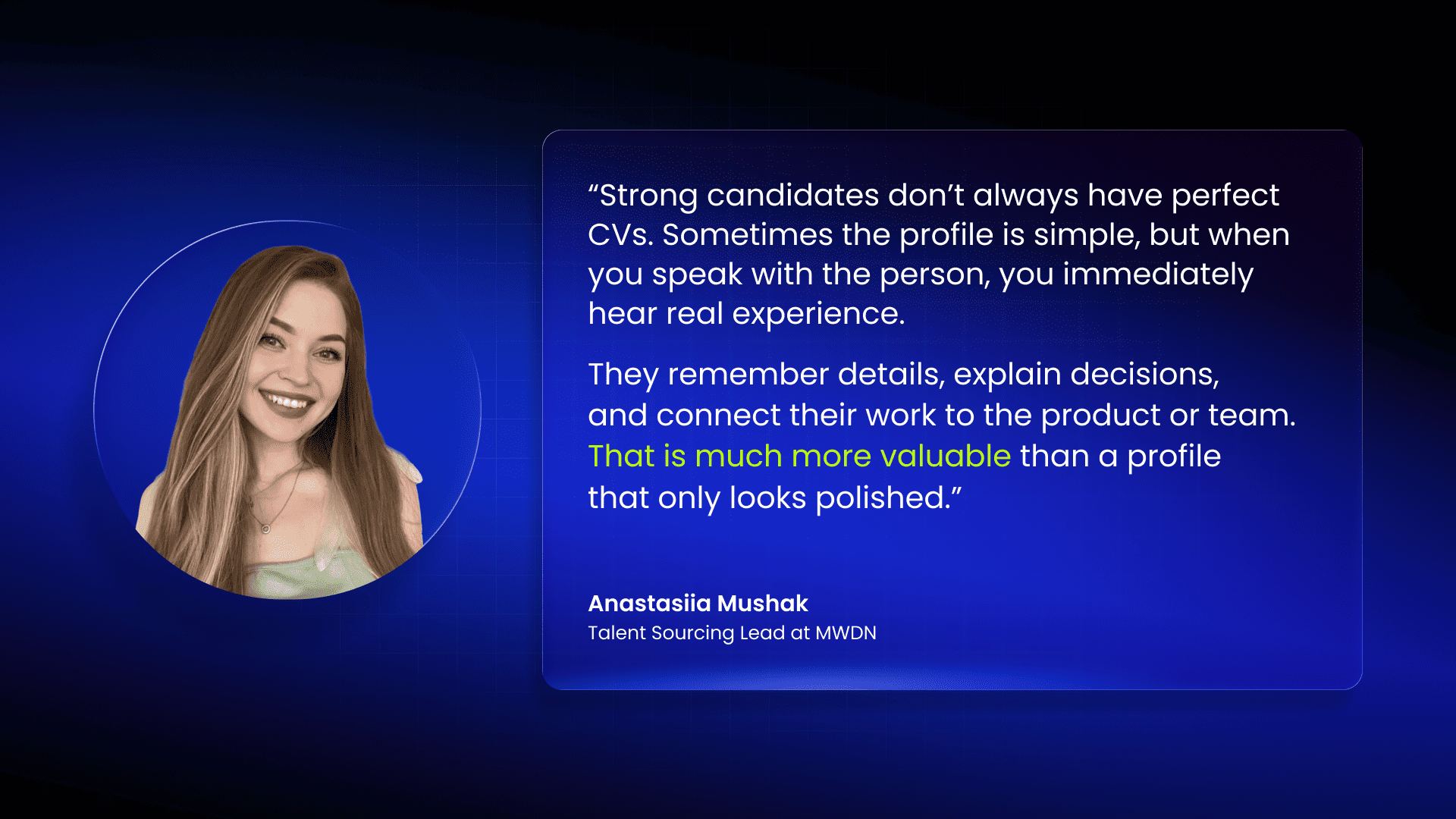
It is important for MWDN clients that AI is not used to reject candidates or give an unqualified short list to people connected to clients. This process should be done in a way that protects the client’s business from spending a lot of money on hiring the wrong person or people. The only reason to use an AI system is to give clients possible candidates who are likely to add value to their organization, communicate well, and take responsibility for their actions.
Genuine expertise VS AI-polished profile
Before moving a candidate to the next stage, you can use a few simple checks. They do not replace a technical interview, but they help reduce noise before the interview pipeline gets overloaded. We created these checklists based on what we have learned from 24 years of hiring.
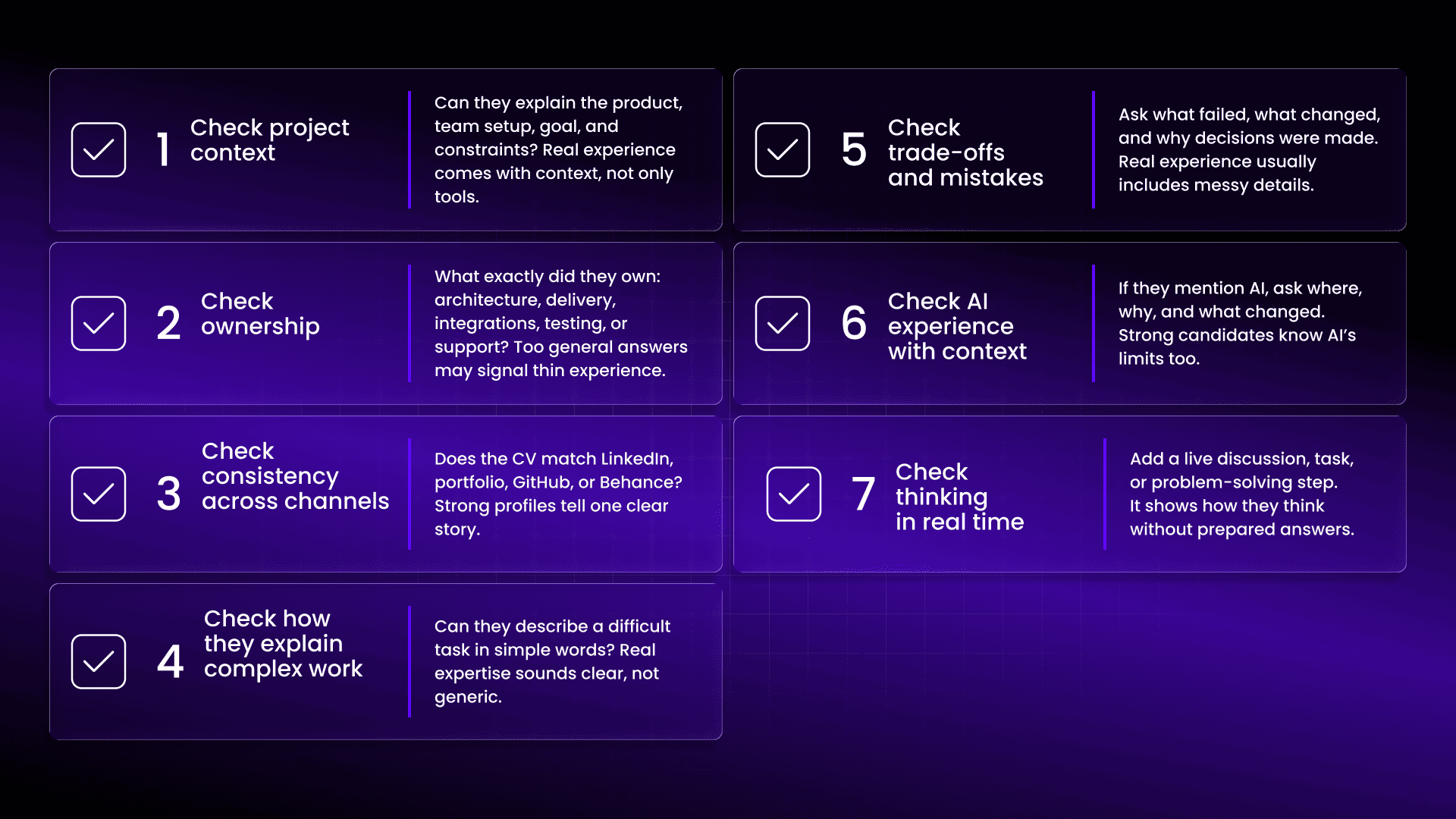
For MWDN clients, this checklist is part of reducing hiring risk early. Good sourcing does not wait until the final interview to reveal weak signals. It verifies the candidate’s experience before the client spends time on the wrong person.
What candidates should know in 2026
This logic applies equally to candidates. While companies are now taking more time reviewing profiles, candidates should also work to make their real experiences easier to verify rather than more confusing.
The use of AI tools is not an issue itself; many high-level professionals use AI tools for CV formatting, interview preparation, code review, writing documentation, or conducting research on a company ahead of time. However, problems arise when AI produces a clearer representation of the candidate’s abilities than the candidate’s actual qualifications.
[table “” not found /]The strongest candidates are not those with the most polished profiles, but those who clearly communicate their value.
Team life beyond sourcing
Good communication matters not just during hiring, but also while working together as a team. It is especially important when we are spread out and working remotely.
This month, our team had a few offline moments that reminded us why remote-first should not equal remote-only.
Meetup in Lviv

Part of the MWDN team gathered in Lviv to work together, discuss current tasks, and spend time outside regular online calls. These meetings may look simple, but they help people reconnect in a more natural way.
Offline meeting in Warsaw
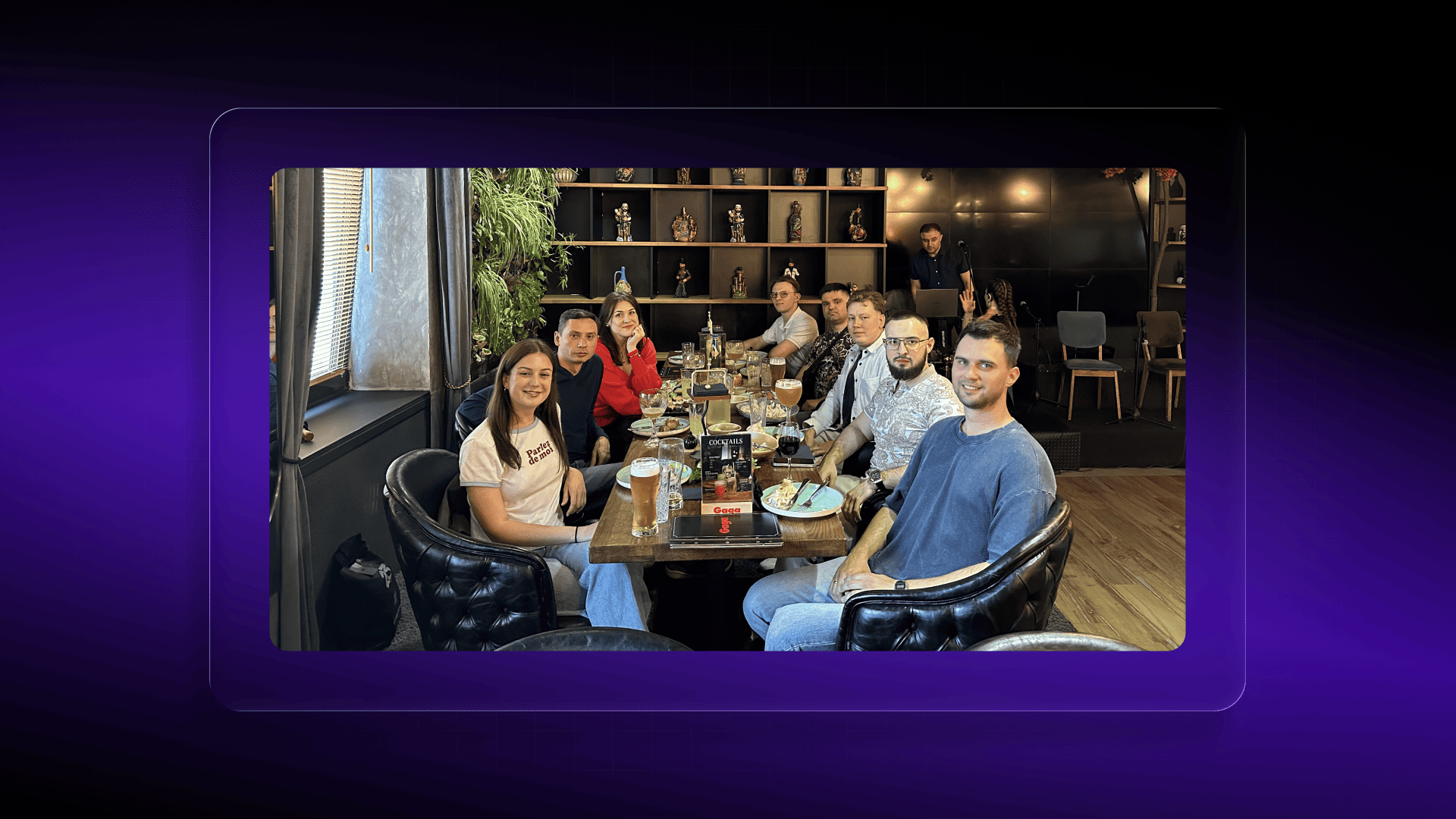
Our Warsaw hub has continued to grow. The team got together in person, in Poland; this allows us to remain close to partners worldwide, provide flexibility for employees who travel, and maintain solid ties with each location.
For a distributed company, these moments are about more than just taking team photos. They help build trust, bring people closer together, and make it easier to work remotely when everyone goes back to their daily tasks.
Current open roles with international teams

The same trust and clarity is important when new people join our client teams. That is why we continue to share open roles for specialists who want to work with international products and deliver real value.
If one of these roles feels like your next step, apply. Or share it with someone who could be a perfect match.
Principal Low-Level Rust Developer | Big Data infrastructure, Israel
Film Director | Media and Entertainment, Israel
Senior Backend Software Engineer | AI Infrastructure, Israel
Senior DevOps Engineer | Computer and network security, Israel
Topics worth discussing further
Behind every open role, you hear the same: how do you find people who can use new technologies in real work, not just mention them in a profile?
MWDN managing partner, Vitalii Vystavnyi, explains why qualified specialists are becoming harder to find, even as technology becomes more accessible.
IT staff augmentation services for growing teams
A practical look at how growing teams can close skill gaps, reduce hiring pressure, and add vetted specialists without losing control over delivery.
Backend developer roadmap 2026
A guide to the skills, tools, salary expectations, and real project responsibilities that define backend developers today.
If you are building an international tech team in 2026 and want to reduce hiring noise, let’s connect.
Sometimes one short conversation is enough to review your current setup, spot where support is missing, and strengthen the processes that keep your team running smoothly day to day.
Let’s stay connected and keep growing in 2026