
Growth usually destroys relationships at first. That’s something MWDN sees again and again while helping clients scale. And it’s also why this article includes practical input from Vitalii Vystavnyi (CEO of MWDN) and Mykhaylo Merkulov (COO of MWDN).
Potential customers appear from everywhere. Messages arrive in different mailboxes. Notes are stored in spreadsheets. Someone “remembers” the last call – until they forget.
This is where a CRM system comes in handy. It’s a simple system for storing customer data, conversations, deals, and follow-ups in one place. Not to “add another tool”, but to maintain trust as your business grows.
For small businesses, CRM is often the fastest way to stay organized and close more deals without chaos. The right relationship management of customers software also forces marketing, sales, and support to work together rather than in different directions.

In this article, we’ll break down what CRM is, why it’s important for small teams, the main types of CRM tools, and how to choose a relationship management of customers system for small businesses that fits how your company actually works.
Importance of CRM for small business
Small businesses win thanks to speed and a personalized approach. But when you have more potential customers, more channels, and more “quick questions”, relationships quickly become chaotic. Notes end up in spreadsheets. Follow-ups remain in someone’s memory. And the same customer may receive three different answers from three different people.
That’s why relationship management of customers is so important for small businesses. Relationship management is about maintaining a constant level of interaction with customers (and often partners), rather than one-off transactions. A CRM system for small businesses turns this idea into a simple, repeatable process.
Why CRM matters (especially for small teams):
- It saves customer context. Every message, call, note, and decision stays in one place.
- It prevents missed follow-ups. Reminders and clear next steps reduce “lost” deals.
- It keeps the team consistent. The customer gets one clear answer, even if several people talk to them.
- It shows what’s happening in the pipeline. Owners and managers can see priorities and bottlenecks fast.
- It supports targeted outreach. Segments help run campaigns without spamming everyone.
- It scales relationships without chaos. More leads and channels don’t automatically mean more confusion.
Good relationship management of customers software provides the team with a single source of truth: contacts, deal stages, messages, and history. CRM systems collect data from multiple channels (email, phone, website, chat, etc.), so the team can respond with context and remain consistent. This consistency is the foundation of trust. It also reduces the number of “misses”, which is one of the most common growth challenges for small business teams engaged in relationship management of customers.
That’s why CRM software for small businesses is not “just sales”. Most of them are designed to bring sales, marketing, and support together around a single view of the customer.
In practice, this helps a small team:✓ respond faster, because the entire history is easy to find
✓ follow up on follow-ups (so deals don’t drag on)
✓ segment contacts and run targeted campaigns (marketers often develop CRM programs to develop leads and retain existing customers)
For many owners, the simplest way to explain value is this: relationship management of customers is a technology solution for increasing sales because it protects relationships at scale (better follow-ups, clearer processes, and fewer missed opportunities). This is the fundamental shift in “relationship management”: from situational communication to a repeatable system.
And as you grow, CRM also ties into broader relationship management. Some companies add enterprise relationship management practices for complex stakeholder networks or build a more robust supplier relationship management process for key suppliers. CRM doesn’t replace them. It supports them by keeping customer data clean and usable.
So when people ask about the best CRM software, the real question is which small business CRM software fits your workflow, channels, and team habits. Choose a CRM solution that your team will actually use every day. Adoption is more important than features.
Types of CRM software & tools
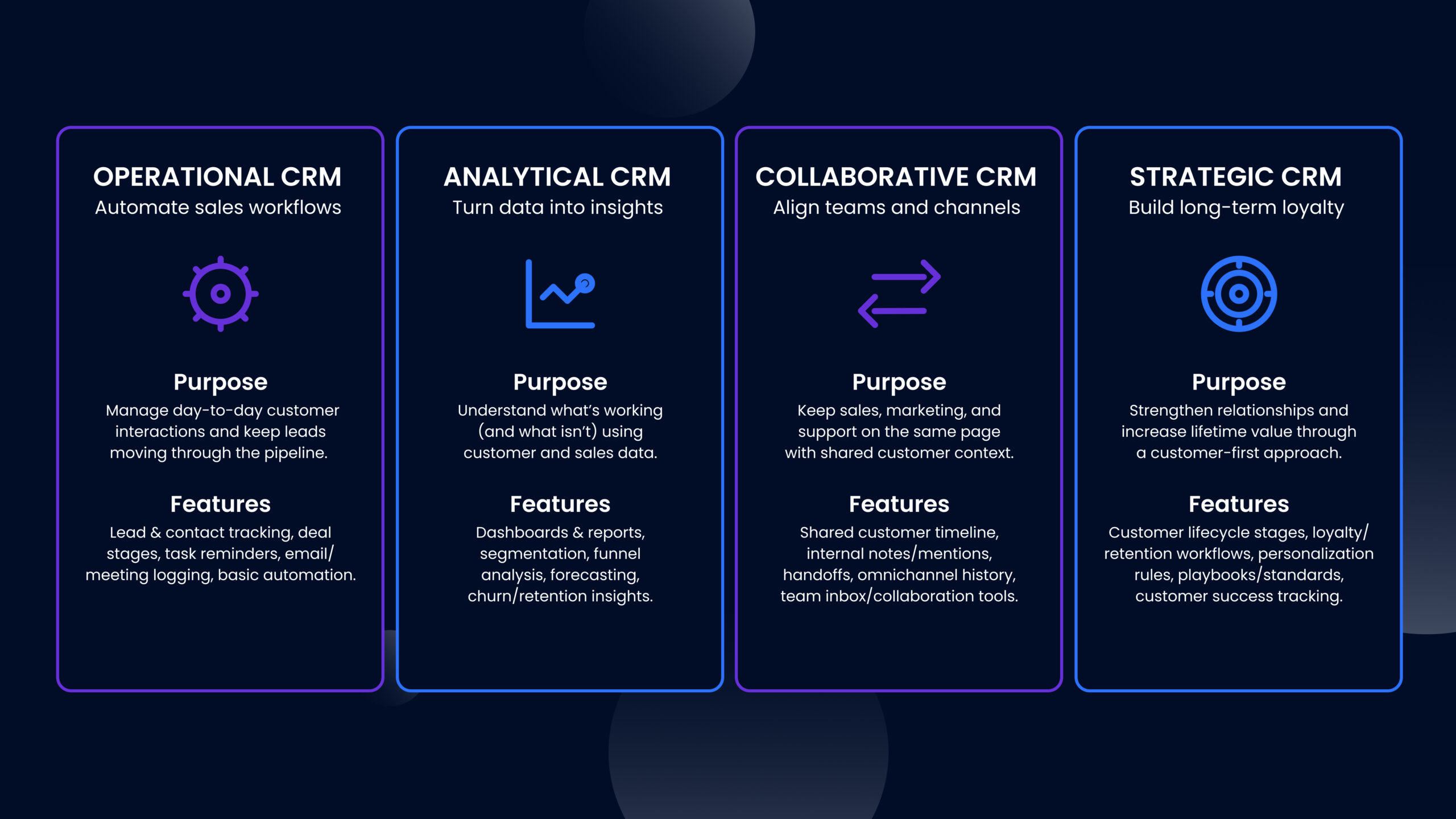
Not all CRM software performs the same functions. Some systems focus on day-to-day sales activities. Others focus on analytics or coordinating the work of multiple teams. The best way to choose the right relationship management of customers solution is to start with the basic types of CRM.
In this article, MWDN experts break down the four core CRM options:
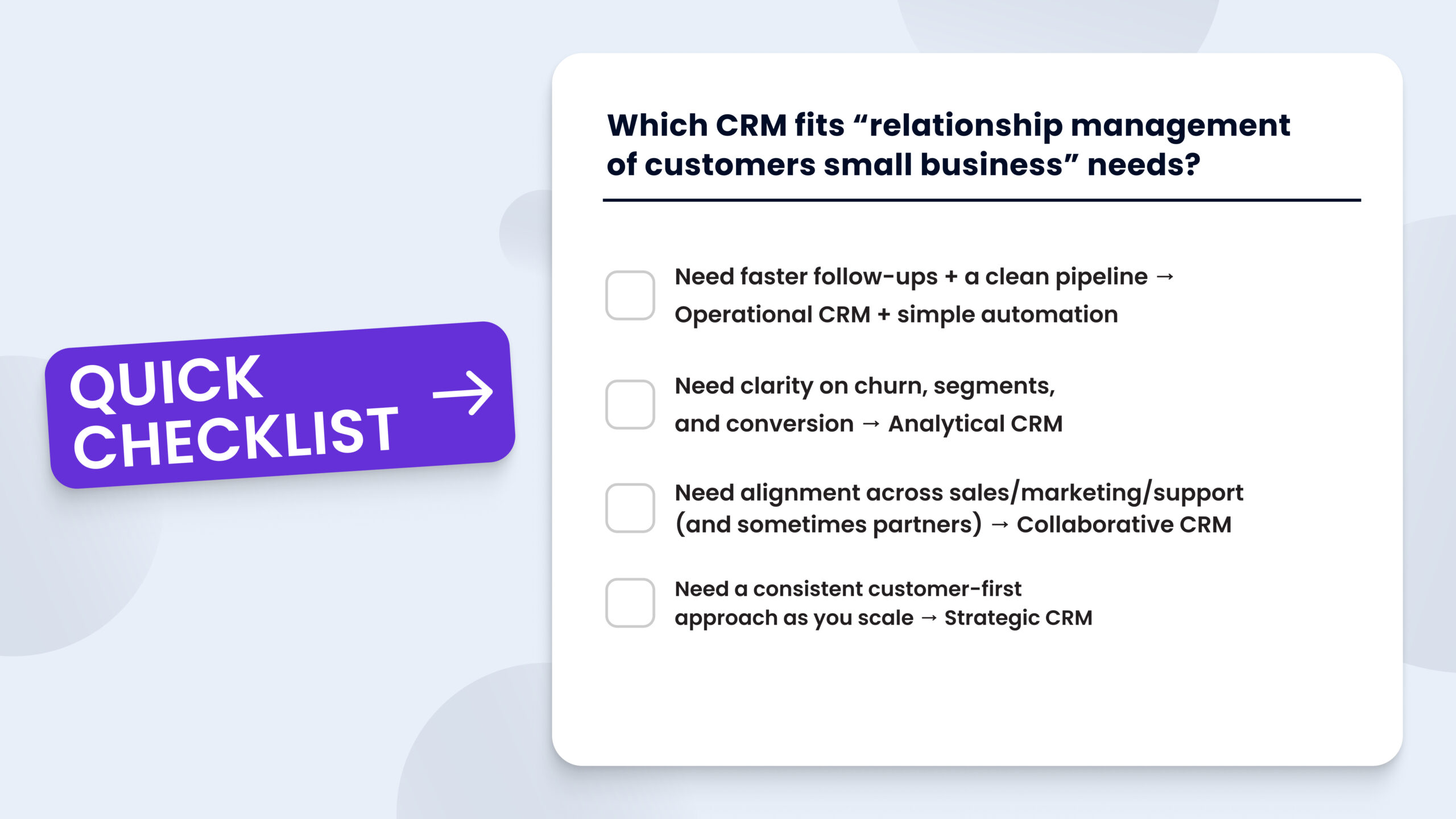
- Operational CRM, that automates daily sales workflows and follow-ups
- Analytical CRM, which turns customer data into insights and forecasts
- Collaborative CRM, that aligns sales, marketing, and support around shared context
- Strategic CRM, which supports long-term loyalty and customer-first growth
“Tools” inside a CRM (what you actually use)
Regardless of type, most CRM tools consist of the same components:
✅
Contacts + interaction history
(calls, emails, chats, meetings, support tickets)
✅
Segmentation
(grouping contacts by industry, behavior, status, etc.)
✅
Opportunities/deals
(tracking leads and potential sales)
✅
Campaigns
(planning and executing marketing activities to attract and retain customers)
That’s why people say that relationship management of customers is a technological solution for increasing sales, as it combines follow-up, visibility, and process discipline. And yes, marketers often develop CRM programs to segment audiences, personalize interactions, and maintain the interest of potential customers until they are ready to buy.
CRM “families” you’ll meet in real life (especially in SMB)
When someone is looking for CRM software for small businesses, they usually compare the following practical categories:
| Area | What you must define | Why it matters in practice |
|---|---|---|
| Product scope | Core features, expected launch version, approximate timeline | Vendors size the team incorrectly if the scope is vague |
| Tech stack | Backend, frontend, cloud preferences, database type if known | Prevents vendors from proposing teams built around the wrong technologies |
| Ownership model | Who controls architecture, backlog priorities, and technical approvals | Undefined ownership leads to delays and constant re-approval loops |
Most modern CRM systems are delivered as cloud/SaaS subscriptions, often with mobile access for remote working. This is why CRMs have become more accessible to small teams over time.
Benefits of CRM software
Relationship management of customers software provides the team with a single shared location for contacts, deals, and all interactions. Instead of scattered notes and phrases, for example “I think we talked about this last week”, everyone sees the same story and can act quickly.
CRM tools are also used to identify trends in customer needs and market tastes, as well as to increase loyalty through better support.
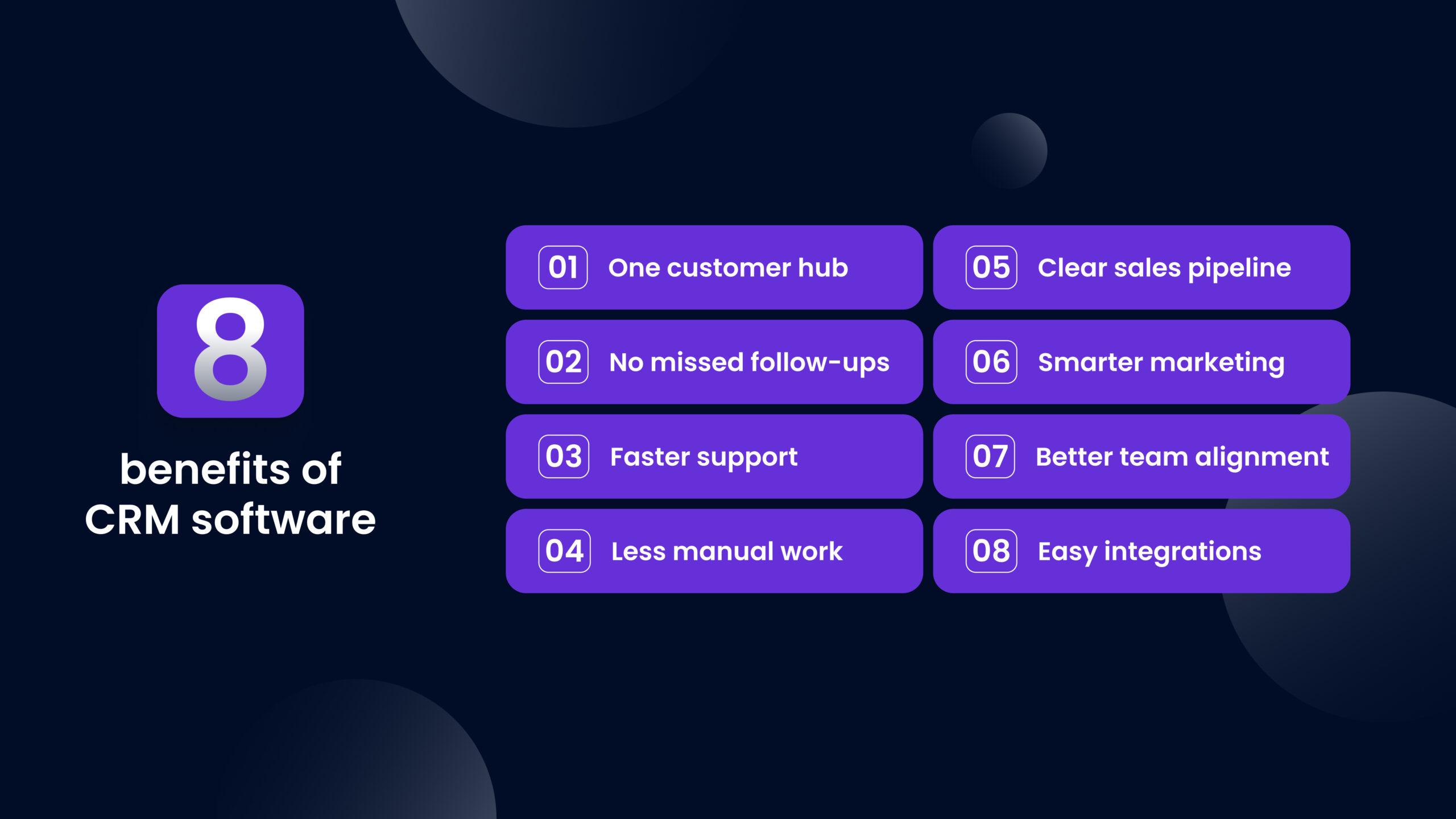
1️⃣ One source of truth for the whole team
A CRM system for small businesses stores customer data, emails, calls, chats, and purchase history in a single record. This reduces manual work and human error, especially as the team grows. It also improves communication between sales, marketing, and support teams, as everyone works in the same context.
2️⃣ More consistent sales execution (and fewer missed deals)
In practice, CRM software helps teams track leads, create opportunities, assign owners, and stick to a clear plan of action. Many systems also automate follow-ups and routine steps, so reps spend less time on administrative tasks and more time on real conversations. That’s why many teams consider CRM to be the essential relationship management of customers’ solutions. It provides structure without slowing down the business.
3️⃣ Better marketing decisions, not louder marketing
Marketers often develop CRM programs to segment their audience, run campaigns, and maintain relevant communication. CRM simplifies this task because segments are built on real data rather than assumptions. When choosing CRM tools, look for segmentation + campaign tracking + clear reporting to keep marketing and sales aligned.
4️⃣ Stronger retention and service quality
CRM promotes long-term loyalty because support teams can see the whole picture: past issues, promises, and what “good service” means to that customer. Relationship management works best when a company feels responsive and consistent. CRM makes this repeatable. This is an important reason why relationship management of customers matters to small businesses: customer retention is often the cheapest lever for growth.
5️⃣ Cleaner operations through integrations (especially for SMBs)
Modern CRM software often links customer interactions with back-end operations. For example, Microsoft’s model is to use a sales system to interact with customers and connect it to a business system for orders, inventory, and finance. This is a practical approach for small business CRM software: simplify sales and integrate what needs to be integrated.
6️⃣ It scales from small business to enterprise
For a small team, CRM software for small businesses is about staying organized and agile. On a larger scale, the same idea applies to enterprise relationship management: more stakeholders, more touchpoints, more reporting, more management. The foundation remains the same (shared data, shared processes, shared accountability).
7️⃣ It supports customer + partner relationships
Relationship management isn’t just about B2C. Many companies also manage relationships with suppliers (vendors, distributors, partners). CRM-style tracking helps teams maintain clear communication, reduce risk, and avoid “surprises” in the supply chain.
So what’s the point?
If you want a simple definition of CRM, it is a structured way of managing customer interactions using data and processes.
And if you want a strategic answer: what is the ultimate goal of it? It is to transform customer interactions into long-term relationships that promote customer retention and sustainable growth, rather than just short-term transactions.
When comparing the best CRM software, the “best” is the one that your team will actually use every day and that fits your processes, not the other way around.
The ultimate aim of relationship management of customers
The ultimate goal of relationship management of customers is simple: to build long-term customer trust that will translate into repeat purchases and stable revenue. It’s not just about having more contacts in your database. It’s not just a “sales tool”. It’s a discipline of attracting new relationships, maintaining existing ones, and increasing loyalty and profitability over time.
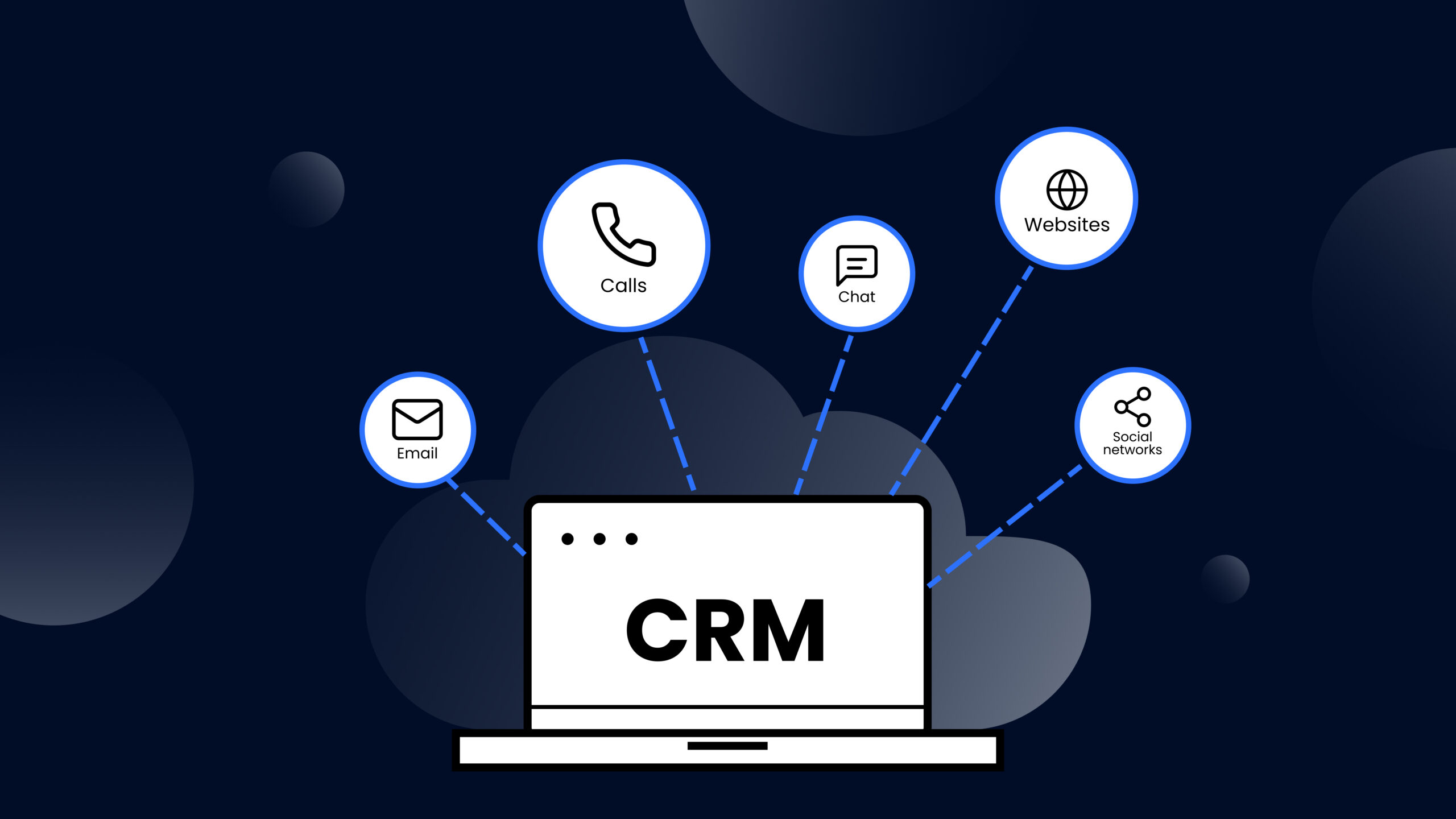
This is precisely why CRM software exists. It helps teams organize, analyze, and improve every interaction across channels. Modern CRM software collects data from email, calls, chat, websites, and social networks so that businesses can better understand their customers, retain them, and increase sales.
Relationship management of customers for small businesses also aims to ensure consistency. When the team is small, every missed opportunity for further interaction has negative consequences. A reliable CRM system for small businesses keeps all information in one place, so anyone can continue the conversation and move it forward.
#1 Strategic relationship management of customers: the “real” goal behind the tool
Tools matter, but strategy matters even more. Strategic relationship management of customers is about creating a customer-centric culture, not treating customers as one-time transactions. In practice, this means that businesses design the entire experience around customer needs and long-term value.
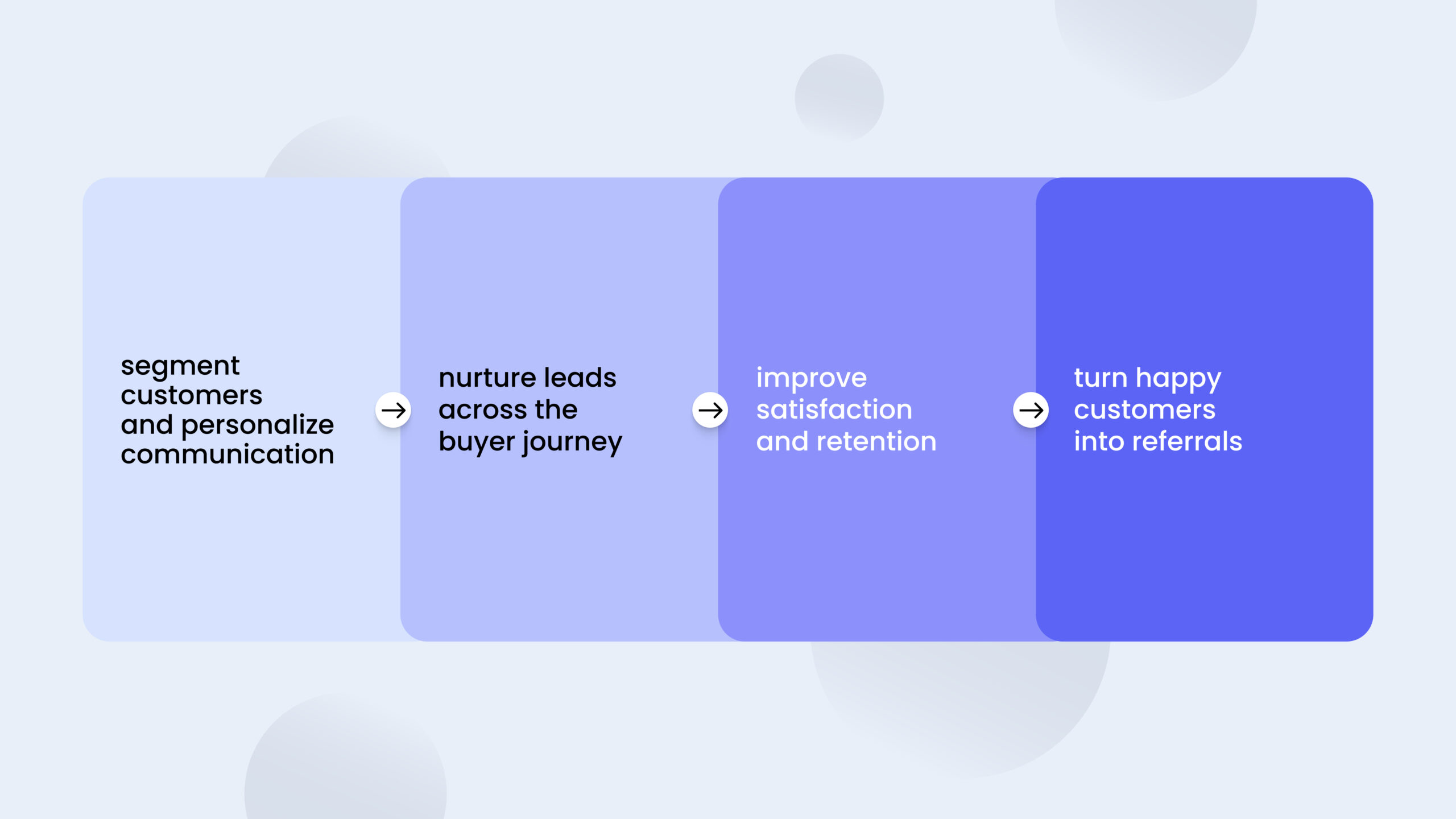
That’s also why marketers frequently design CRM programs to:
#2 CRM is a technology solution for increasing sales, but that’s not the whole story
Yes, relationship management of customers is a technological solution for increasing sales. CRM systems automate and coordinate sales, marketing, and support based on a “single view of the customer”, ensuring timely follow-up and process transparency.
But an even greater advantage is operational transparency. Good CRM software reduces the number of assumptions. It makes the relationship process repeatable: who contacted whom, what was agreed upon, what will happen next, and why.
#3 Beyond customers: enterprise relationship management and supplier relationships
CRM puts the customer first, but relationship management often goes beyond that. Many companies also manage supplier relationships and partner relationships to reduce risk and avoid disruptions. This broader approach is sometimes called enterprise relationship management. It’s network thinking, not just a list of customers.
The best CRM software isn’t the “biggest”. It’s the one that supports your real customer management relationships: clear next steps, shared context, and easy implementation for your team. For many teams, this is exactly what CRM software for small businesses and practical CRM tools should provide.
How relationship management of customers support business management in MWDN
Growth adds more people to each transaction. More messages. More stakeholders. More “small details” that determine whether a customer stays or leaves. At some point, relationship management cannot exist only in someone’s head. It requires a system.
That’s why CRM systems were created. Relationship management is about ongoing interactions with customers and business partners, not one-off transactions. A reliable CRM solution turns this idea into a daily routine: track every point of contact, see the full context, and act accordingly.
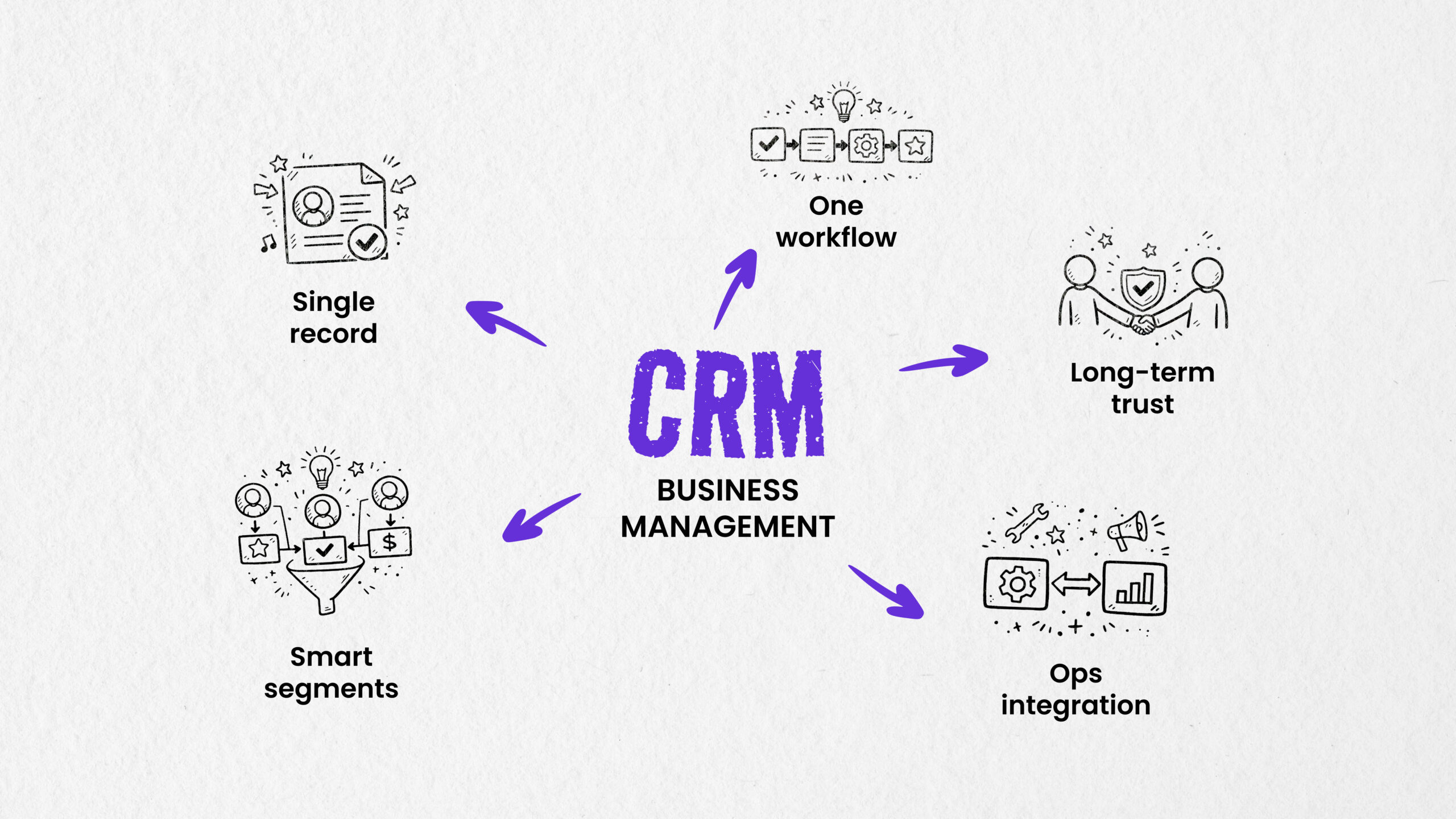
One source of truth for decisions
CRM stores all customer information in one place: contacts, stakeholders, messages, calls, meeting notes, decisions, and next steps. This eliminates “I think” from management. You can see what has been agreed upon, what is under consideration, and what is happening in the process.
Clear process for sales, marketing, and service
CRM is not just a list of contacts. It combines sales, marketing, and service into a single flow: interest, needs assessment, support, adaptation, maintenance, and renewal. The goal is to reduce discrepancies between teams and the number of “lost” conversations.
Segmentation and focus (so managers don’t spread the team thin)
Segmentation helps you stay focused. CRM allows you to group customers and prospects by industry, size, deal stage, service model, urgency, or intent. This makes customer engagement more relevant and helps managers prioritize based on importance.
Better long-term relationships (the strategic layer)
The goal of CRM is not “more data”, but better relationships. Long-term trust is based on consistent value, clear communication, and quick problem solving over time. CRM supports this by keeping context, history, and commitments visible.
CRM + operations (when “relationship” becomes delivery)
When CRM is linked to operational activities, relationship management also becomes supply management. In many companies, CRM deals with customer interactions, while another system handles orders, invoicing, inventory, and finances. Integration is what makes the process from “prospect to cash” and ongoing service seamless.
Where MWDN comes in
At MWDN, working with CRM is viewed primarily as business management, and only then as “software configuration”.
Typical support looks like this:
→ Draw up a map of management relationships: who is responsible for the pipeline, data quality, and follow-up actions.
→ Choose the right CRM software for small businesses based on processes (not trends).
→ Implement automation, integration, and reporting so that CRM is actually used.
→ Add capacity to perform tasks as needed (MWDN can provide proven engineers from a large talent pool) to create custom workflows, connectors, dashboards, and clean data transfers.
This is how teams get closer to the best CRM software for them. Not the most famous, but the one that fits their way of selling, providing services, and retaining customers.
FAQ of Relationship management
What is the main purpose of relationship management?
Relationship management is a process that companies use to manage and leverage their relationships with customers and suppliers. This process involves analyzing data and using software to attract new customers, increase and protect brand loyalty, identify inefficiencies, reduce risks, and increase profitability.
Why do companies use relationship management?
Companies use relationship management for many reasons. Relationship management is a strategy that helps them establish new and maintain existing relationships with customers and suppliers. It allows them to increase brand loyalty, boost sales, attract new partners, and increase profitability. It also helps them reduce risk by helping to ensure supplier reliability.
How can relationship management be improved?
There are several ways in which companies can improve relationship management. These include setting and defining clear goals. Companies can also use special tools and software to analyze data and provide/request feedback from customers and suppliers. Staff training and development is also a key factor in improving relationship management. A great option would be to hire a relationship manager who would be responsible for analyzing data, communicating with customers, creating surveys, developing messages, and delegating tasks.