
Did you know that software itself can affect energy waste and energy efficiency? Most people think of servers and power-hungry devices when it comes to digital energy use, but software itself plays a major role, too!

According to the IEA’s Electricity 2024 report, data centers consumed around 415 TWh in 2024 – roughly 1.5% of global electricity demand – and that figure is projected to more than double by 2030, driven largely by AI workloads.
The way we write and deploy software can be one of the most underrated levers in addressing the climate crisis, and here’s how.
What is energy-efficient coding?
At its core, it’s how we design, write, and deploy code that uses minimal computing power, memory, and bandwidth to perform its functions.
Energy-efficient software development
has become a quiet but essential front in the fight against climate change.
The Green Software Foundation, a non-profit under the Linux Foundation backed by Microsoft, Accenture, GitHub, and Thoughtworks, formalizes this through its Software Carbon Intensity (SCI) specification (now an ISO standard (ISO/IEC 21031:2024)) which measures carbon emitted per unit of useful work.
Why does it matter?
First, the environmental stakes are high. Every inefficient loop, memory leak, or bloated application piles up into wasted processor cycles and, ultimately, more carbon emissions, especially when scaled across millions of devices or data center workloads. To reduce this waste, you can optimize software for
energy efficiency
, which will help to shrink the carbon footprint of digital infrastructure.
Second, there are economic upsides. For businesses, lighter code means reduced cloud compute costs and lower energy bills. For consumers, it means apps that don’t drain batteries and devices that last longer.
The broader impact is just as significant. Efficient code extends the usable life of hardware, slows down the replacement cycle, and decreases pressure on supply chains and e-waste systems. In that sense, energy-efficient development supports the principles of a circular economy: fewer resources used, less waste produced, and more sustainable digital growth.
How can software speed up energy efficiency across sectors?
Energy efficiency software
becomes a cornerstone of sustainable development across industries, quietly reshaping how buildings, factories, transportation networks, and even personal devices consume energy. These tools optimize operations, actively reduce emissions, and conserve resources in ways that are measurable and impactful.
In the construction industry, software uses data from IoT sensors, weather forecasts, and AI algorithms to manage HVAC systems, lighting, elevators, and even window shades. By adapting operations to real-time occupancy and environmental conditions, these tools decrease unnecessary energy use and deliver significant cost savings. For example, a DOE-funded PNNL study found that properly tuned automation across HVAC setpoints, lighting, and ventilation could save commercial buildings an average of 29% on total energy use.
- On the industrial side, energy efficiency software tools change the way factories operate. These systems monitor everything from conveyor belts to robotic arms, identify energy waste, and adjust equipment usage in real time. Google’s DeepMind case study, for example, achieved a 40% reduction in data-center cooling energy after applying ML-based control to live operations.
- Supply chains also benefit, as software facilitates logistics and minimizes overproduction and transportation inefficiencies.
- For heavy industries like steel or chemicals, these optimizations can reduce energy use per unit of output by double-digit percentages.
- Transportation also undergoes a digital transformation. Fleet management platforms use real-time traffic data and predictive analytics to optimize delivery routes and cut fuel consumption. Traffic systems dynamically adjust traffic lights and signage to ease congestion and lower fuel use and emissions. UPS’s ORION route-optimization system saves an estimated 10 million gallons of fuel and 100,000 metric tons of CO₂ annually.
Even at the individual level, embedded in smartphones and laptops, these tools make a difference. Efficient apps and operating systems extend battery life and minimize processor usage, indirectly reducing the power load on charging stations and data centers. As devices become more powerful, these micro-savings accumulate to have a significant global impact.
Software’s role in modeling and optimization
Energy efficiency modeling software
affects the way we plan and manage energy use in complex environments: from single buildings to industrial sites, and even entire cities. By simulating how energy flows through systems, these tools can predict consumption patterns, identify inefficiencies, and suggest targeted improvements.
A key enabler of this progress is the integration of predictive analytics and machine learning technologies, which are rooted in the same foundations as
climate change modeling software
.
Engineering teams typically rely on tools like EnergyPlus and OpenStudio for building modeling, Azure Digital Twins or NVIDIA Omniverse for large-scale simulation, and built-in carbon dashboards from AWS, Google Cloud, and Microsoft to measure cloud workload emissions.
Predictive analytics and machine learning
These technologies analyze historical and real-time data to forecast future energy usage. For example, smart grids use machine learning to anticipate demand spikes and optimize electricity distribution. In industrial settings, predictive models can detect equipment wear and predict maintenance needs, minimizing downtime and energy waste.
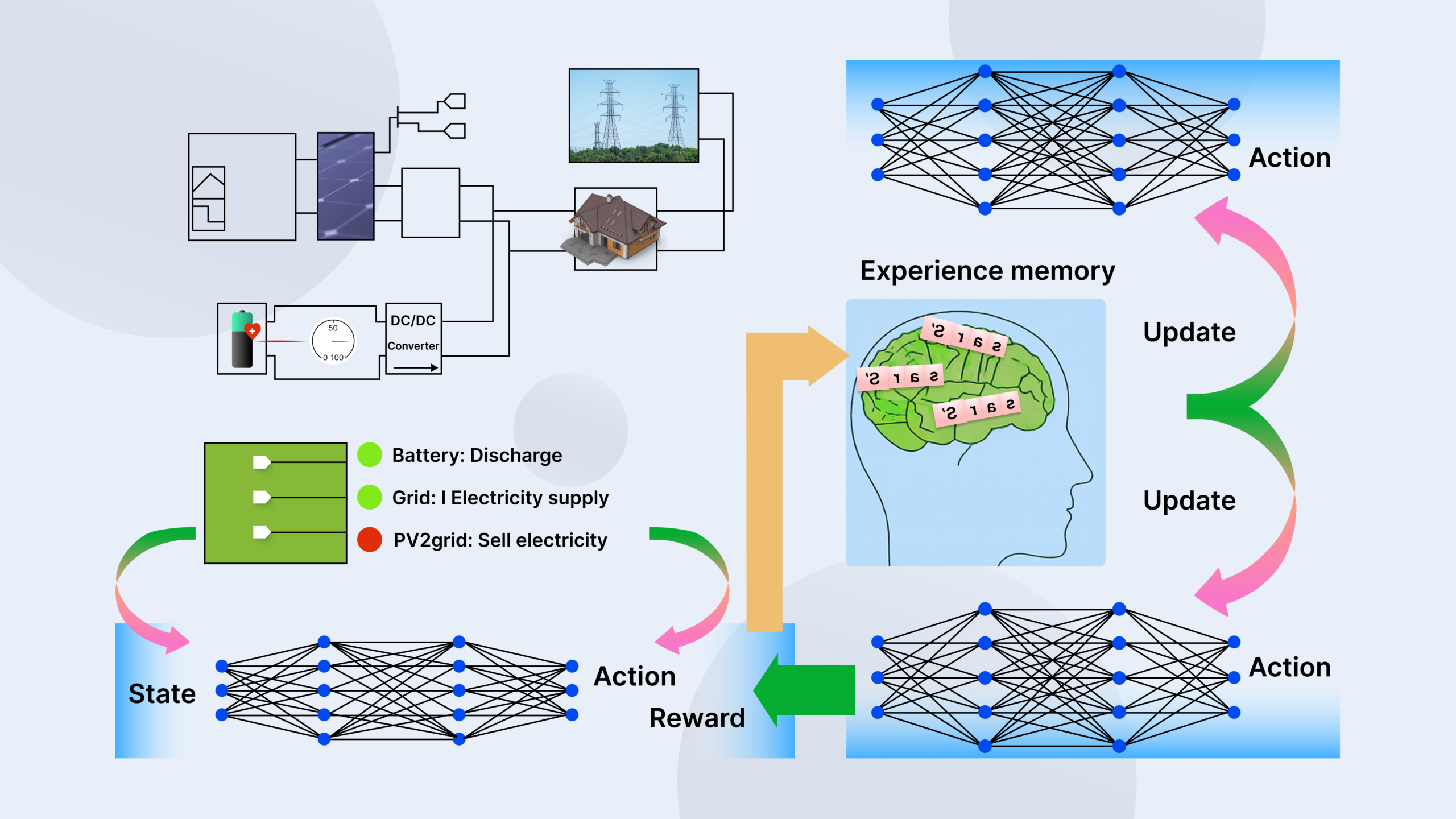
Source: Sketch of smart grid optimization using a deep neural network-based reinforcement learning algorithm from Smart Grid Optimization by Deep Reinforcement Learning over Discrete and Continuous Action SpaceAnother example of
energy efficiency software tools
is the use of digital twins.
Digital twins for efficiency
Digital twins are virtual replicas of physical systems that simulate real-world behavior in real time. Digital twins help engineers test and refine optimization strategies without disrupting actual operations.
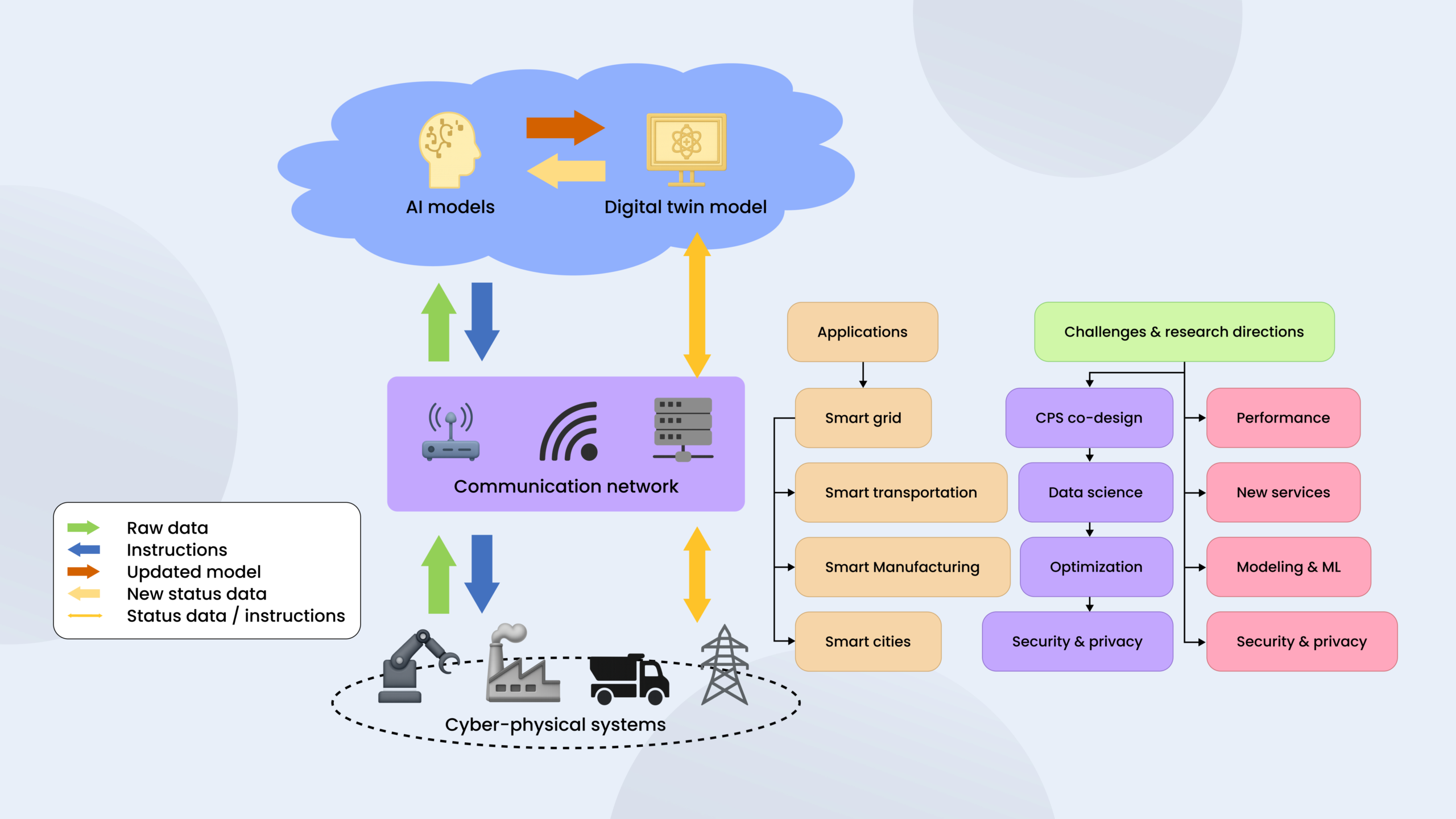
Source: Graphical abstract from Digital Twin—Cyber Replica of Physical Things: Architecture, Applications and Future Research DirectionsFor example, facility managers can simulate how different HVAC settings impact energy use before implementing changes. Manufacturers can model production lines to reduce energy consumption and increase throughput.
These technologies can turn energy efficiency from a manual, reactive process into a continuous, data-driven optimization loop. With the right combination of
energy efficiency modeling software
, machine learning, and digital twins, we can cut emissions and costs.
Practical strategies for energy-efficient software development
Energy-efficient software development
starts at the algorithmic level. Efficient algorithms reduce CPU cycles and memory usage, which in turn lowers the energy demands of computing systems. Here are some of the strategies a
climate change software engineer
focused on sustainability can use to optimize their code:
Resource management
Every byte transmitted or processed consumes power, especially at scale. Efficient I/O operations and smart caching strategies help reduce both latency and electricity use. These are the steps resource management involves.
- Memory management. Making sure the application uses only as much memory as needed, and releasing it when it’s no longer in use.
- CPU usage. Code optimization so it doesn’t consume excessive processor cycles.
- I/O efficiency. Minimizing the time spent on input/output operations (like reading from disk or network requests) through buffering, caching, or asynchronous handling.
- Cloud resource optimization. Virtual machines, containers, and serverless functions management to avoid over-provisioning.
- Energy awareness. Designing software with lower power usage in mind, especially important in mobile, embedded, or edge devices.
Optimization of cloud resource allocation
This practice makes sure that cloud computing resources are used as efficiently as possible. Here’s how it works:
- Right-sizing resources. One of the most common mistakes in cloud usage is reserving too much computing power “just in case.” Right-sizing involves analyzing actual workloads and adjusting virtual machine sizes or containers to match real needs.
- Auto-scaling. AWS, Azure, and Google Cloud allow applications to automatically scale up during high demand and scale down during low usage. Dynamic scaling prevents waste and supports energy efficiency in real-time.
- Serverless computing. With serverless functions (like AWS Lambda, Google Cloud Functions), you don’t manage servers at all. You simply run code in response to events, and you’re only billed for the exact time your code runs.
- Cloud provider sustainability. Many cloud providers now offer data centers powered by renewable energy. By choosing regions with better sustainability metrics or using carbon-aware computing and scheduling, you can reduce your carbon footprint. Microsoft Azure and Google Cloud, for example, offer dashboards showing the carbon impact of your workloads.
- Carbon-aware scheduling. Non-urgent workloads (batch jobs, model training) can run when the local grid is cleaner. The Green Software Foundation’s open-source Carbon Aware SDK makes this routine, and Microsoft’s Xbox console became the first carbon-aware gaming console in 2023, scheduling downloads for low-carbon-intensity windows on the local grid.
Apart from these strategies, there’s also things like lazy loading and asynchronous operations, which ensure that only necessary code and assets are executed or loaded when required. This reduces peak resource consumption and flattens power demand, particularly useful for web and mobile apps.
Sustainable AI in 2026: training and inference without the energy waste
- Right-size the model. A distilled 7B-parameter model that meets the accuracy bar costs a fraction of the inference energy of a 70B one – see Hugging Face’s Open LLM Leaderboard for accuracy-vs-size tradeoffs.
- Batch and cache at inference. Serving frameworks like vLLM and TensorRT-LLM increase tokens-per-watt through continuous batching and KV-cache reuse.
- Train in clean regions. Google Cloud publishes per-region carbon-free energy data; running a multi-week training job in a region like Finland (97% CFE) versus a coal-heavy one can change the footprint dramatically for the same compute.
- Reuse instead of retraining. Strubell et al. (2019) showed that training a single large NLP model could emit as much CO₂ as five cars over their lifetimes – fine-tuning open weights or using RAG avoids most of that cost.
The role of the climate change software engineer
Do you feel like the need for a new kind of developer is emerging, the
climate change software engineer
? These people are the link between code and climate; they can design systems that prioritize performance and sustainability equally. Their role isn’t limited to optimizing software for speed or scale; they must also consider how each design choice affects energy consumption and environmental impact.
Collaboration between the tech industry and policymakers is more important than ever. Governments and regulators are starting to recognize the importance of
sustainable software
practices. Standards, certifications, and financial incentives can accelerate the adoption of
energy efficiency software solutions
, especially in industries where outdated code and infrastructure still dominate.
Driving change requires action at every level. Developers should be empowered to make energy-smart decisions, companies must prioritize sustainability in their product roadmaps, and consumers can influence the market by choosing efficient tools and services! The transition to a greener tech ecosystem begins with awareness and the people writing the code. Every climate change software engineer, every company choosing an energy efficiency software solution, plays a part in shaping a cleaner, smarter world.
If you’re scaling a team and want engineers who treat sustainability as a first-class concern alongside performance and cost, MWDN sources senior developers with backgrounds in cloud optimization, MLOps, and platform engineering – the skill sets that overlap most with green coding work. Schedule a consultation or get a hiring estimate, and we’ll scope a shortlist within a week.