
 Forget hailing a cab – these days, apps are everywhere, from booking a table to getting a ride. The app market is growing fast, but the rules for app stores keep changing. This article will explain exactly how much it costs to build an app in 2024, considering things like adding artificial intelligence and app store fees.Whether you’re a business owner starting out with apps or a pro, this breakdown will give you the knowledge you need to understand the exciting world of app development.
| Type | Simple app | Medium complexity app | Complex app |
|---|---|---|---|
| Example | A basic to-do list or calculator | Social media or e-commerce app | A game with high-end graphics or a finance app with real-time data |
| Cost | $10,000 – $40,000 | $60,000 – $150,000 | $150,000+ (can reach millions for highly advanced apps) |
| Breakdown | These apps typically have limited features and functionalities. Development might involve basic user interfaces, data storage, and minimal integrations with external services. | These apps offer more features and functionalities. Think user profiles, in-app purchases, social media feeds, or basic content management systems. Development involves more complex interfaces, databases, security measures, and potentially some integrations with third-party services. | These apps push the boundaries of functionality and user experience. Think real-time features, complex animations, intricate user interfaces, robust security systems, and extensive integrations with external services. Development requires highly skilled developers and potentially specialized tools. |
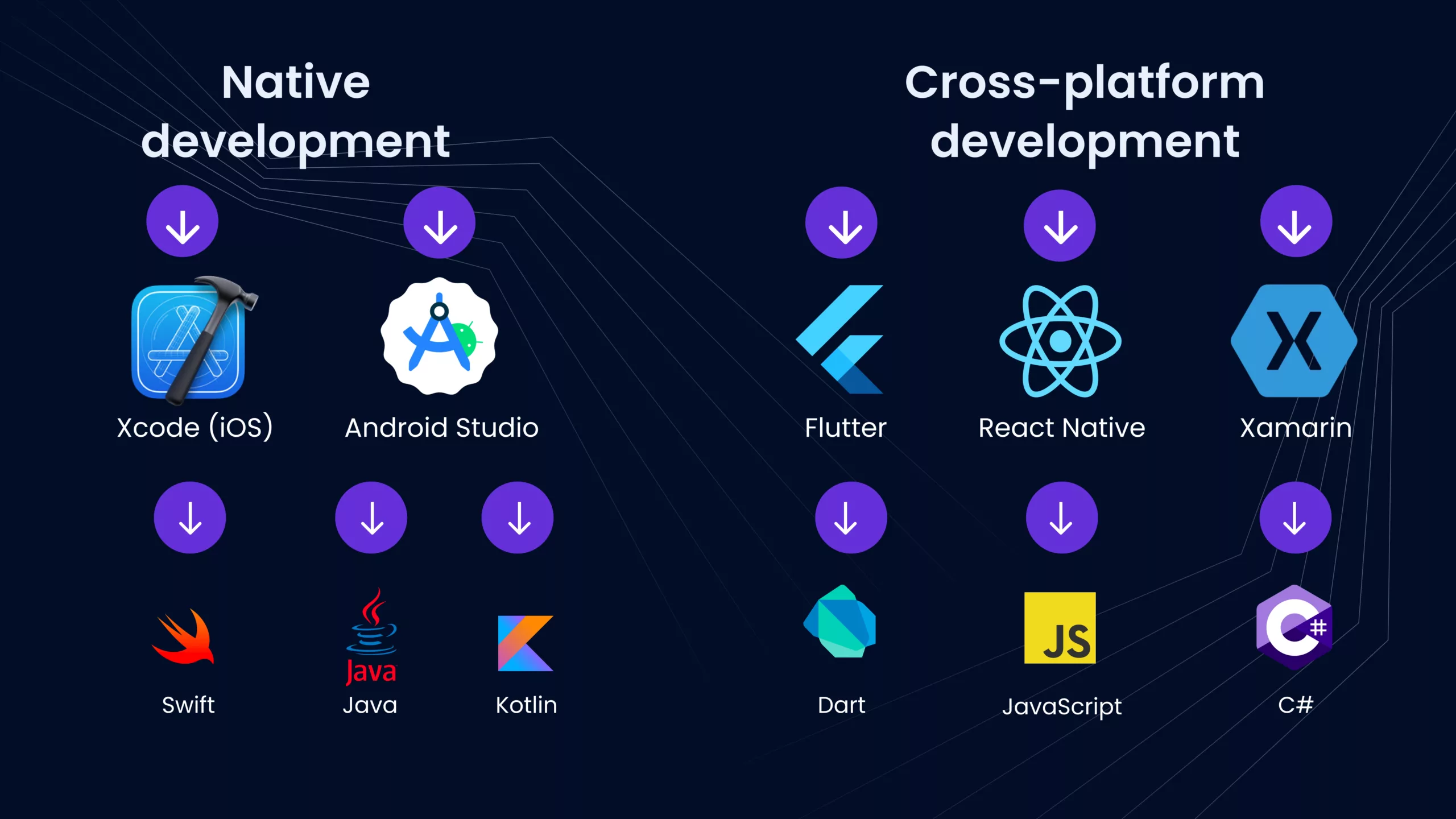 If your app doesn’t require a lot of device functionality, you might consider building a web app instead. This can be accessed from any device with a web browser and doesn’t require users to download anything.There are also low-code/no-code platforms that offer drag-and-drop interfaces and pre-built components that allow users with little to no coding experience to create basic apps. They can be a good option for simple prototypes or internal use cases. Let’s have a closer look at this option
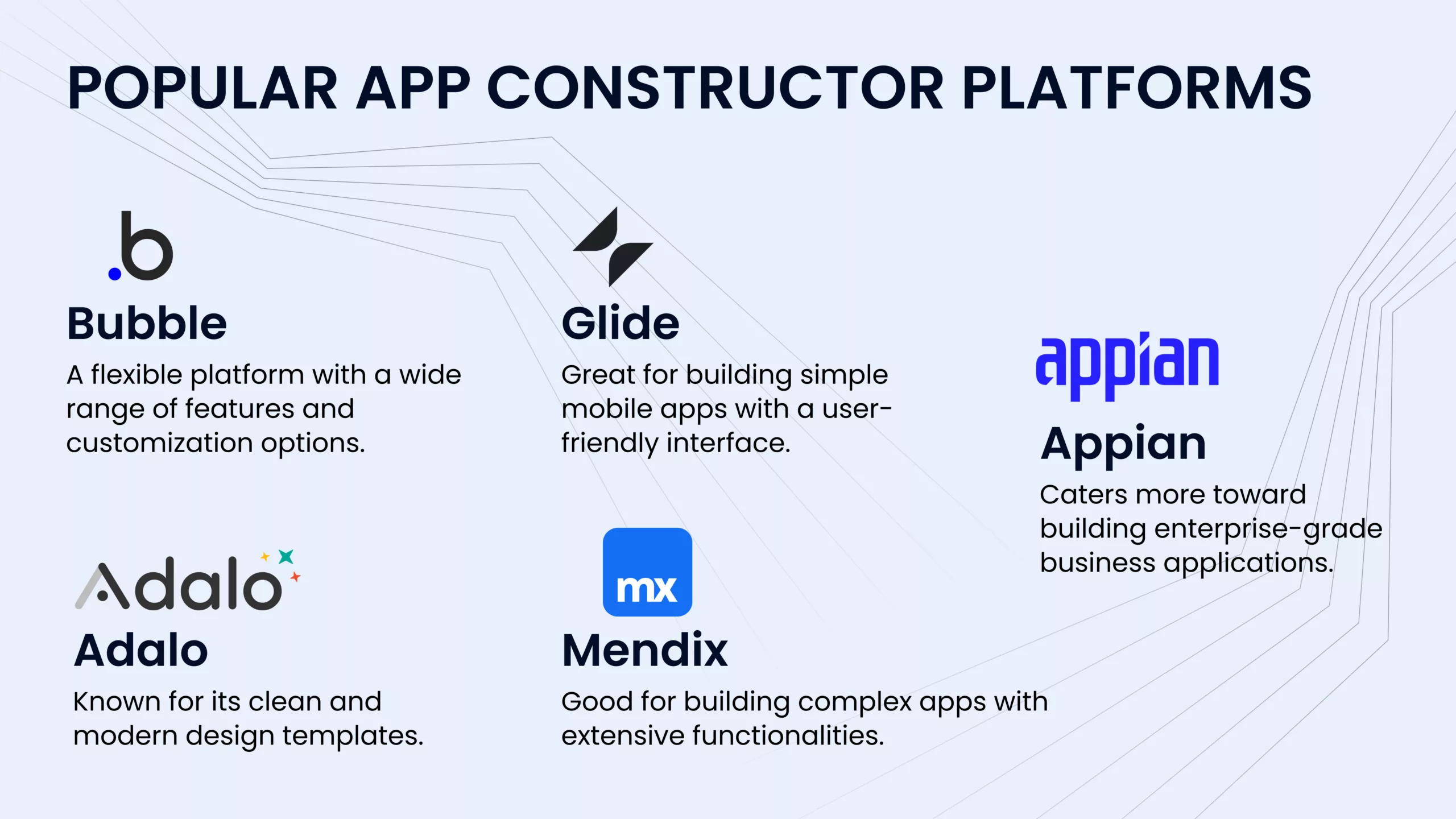 However, there are certain things to keep in mind with app constructors. First, they have limitations. Constructors may not offer the same level of customization or control as native app development. Second is pricing. While some offer free plans, advanced features often come with subscription fees. Third, app store approval is still required. Your app might still need to go through the app store approval process.
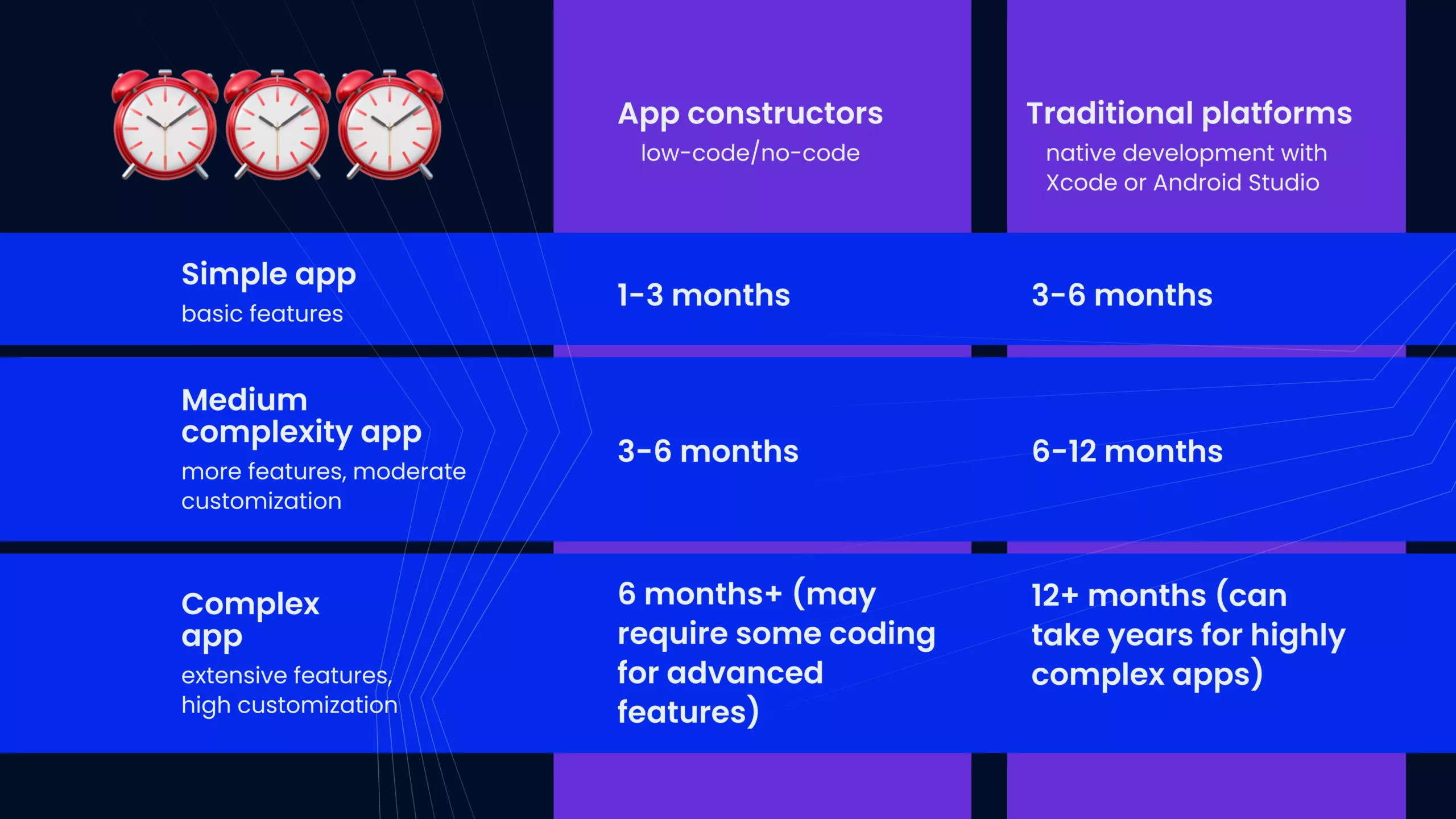 What about in-house development? Here, timeframes can vary depending on your team size and experience, project complexity, and development methodology (Agile approaches often lead to faster iterations and shorter development cycles). Here’s how much time you might need depending on your team size: Small team (2-3 developers). Add 20-50% to the traditional platform timeframes mentioned above.Medium team (4-6 developers). Timeframes are closer to traditional platform estimates, with the potential for faster iteration due to increased collaboration.Large team (10+ developers). May even be slightly quicker than traditional platform estimates due to greater expertise and division of labor.
| Type | App constructors | Traditional platforms |
|---|---|---|
| Technologies | Low-code/No-code | Native development – Xcode, Android Studio |
| Cost | Typically more affordable with subscription plans ranging from $0 – $500+ per month. | Generally more expensive due to developer expertise required. Hourly rates can vary depending on location and experience, but typically range from $50 – $250+ per hour. |
| Breakdown | These platforms offer pre-built components and drag-and-drop interfaces, making them easier to use, especially for beginners. However, they might require additional fees for specific features or custom development exceeding the limits of the platform. | This approach offers full control and access to all features of the chosen platform (iOS or Android). It requires experienced developers who can write code specific to that platform, leading to a higher overall cost. |
| Country | Hourly rate | Estimated app cost |
|---|---|---|
| USA | $100 to $200 per hour | $80,000 – $160,000 |
| Philippines | $30 to $50 per hour | $40,000 – $80,000 |
| Egypt | $25 to $40 per hour | $30,000 – $60,000 |
| Ukraine | $30 to $70 per hour | $40,000 – $105,000 |
| Brazil | $50 to $80 per hour | $60,000 – $120,000 |
| South Africa | $50 to $70 per hour | $60,000 – $105,000 |
| India | $20 to $50 per hour | $25,000 – $75,000 |
| Poland | $40 to $60 per hour | $50,000 – $90,000 |
| Ireland | $80 to $150 per hour | $65,000 – $120,000 |
[embedyt] https://www.youtube.com/watch?v=Yb4OP8RCe4w[/embedyt]
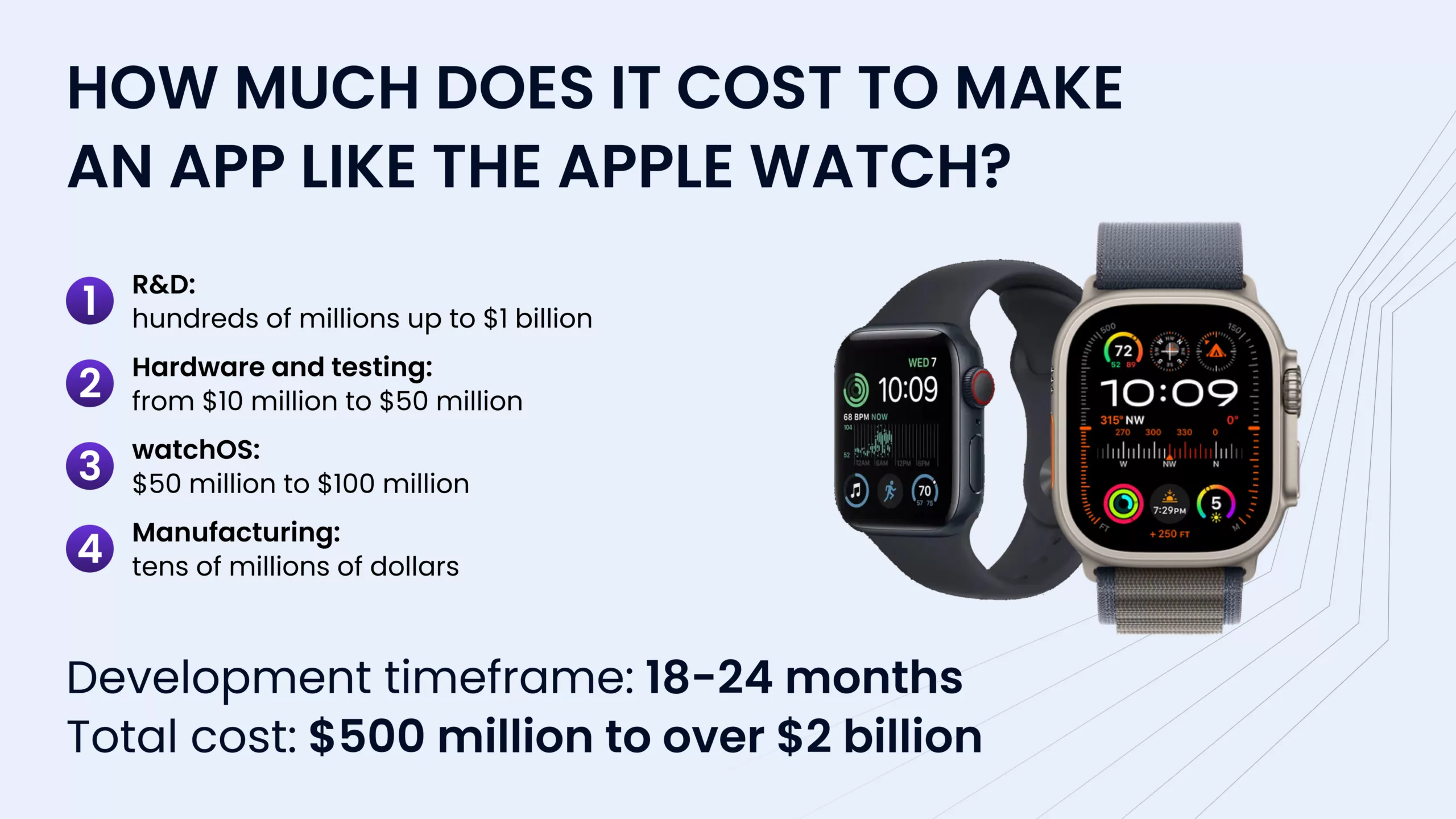 Even though Apple keeps its R&D spending confidential, we can make some assumptions based on industry knowledge and what we know about the Apple Watch’s features.Estimated timeframe. The Apple Watch was first announced in September 2014 and launched in April 2015. This suggests a development timeframe of roughly 18-24 months. This timeframe would encompass various stages, including conceptualization and design, hardware prototyping and testing, software development (watchOS), integration with iPhone and health apps, and manufacturing process development.What about costs? Again, we don’t have exact figures. These are just our speculation.
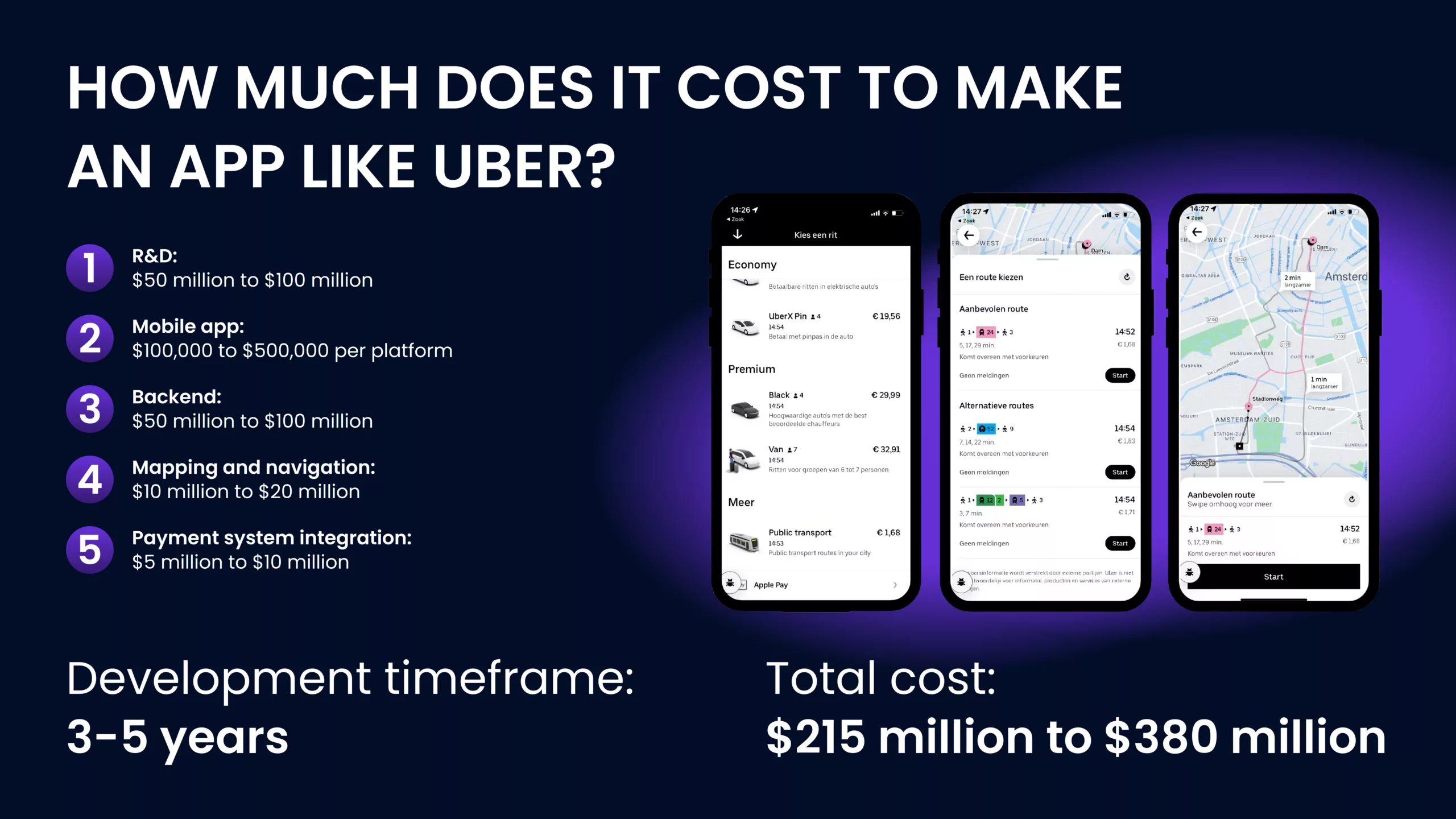 Let’s continue with something simpler. While Uber’s exact development cost figures remain undisclosed, we can explore potential breakdowns based on industry knowledge and the app’s features.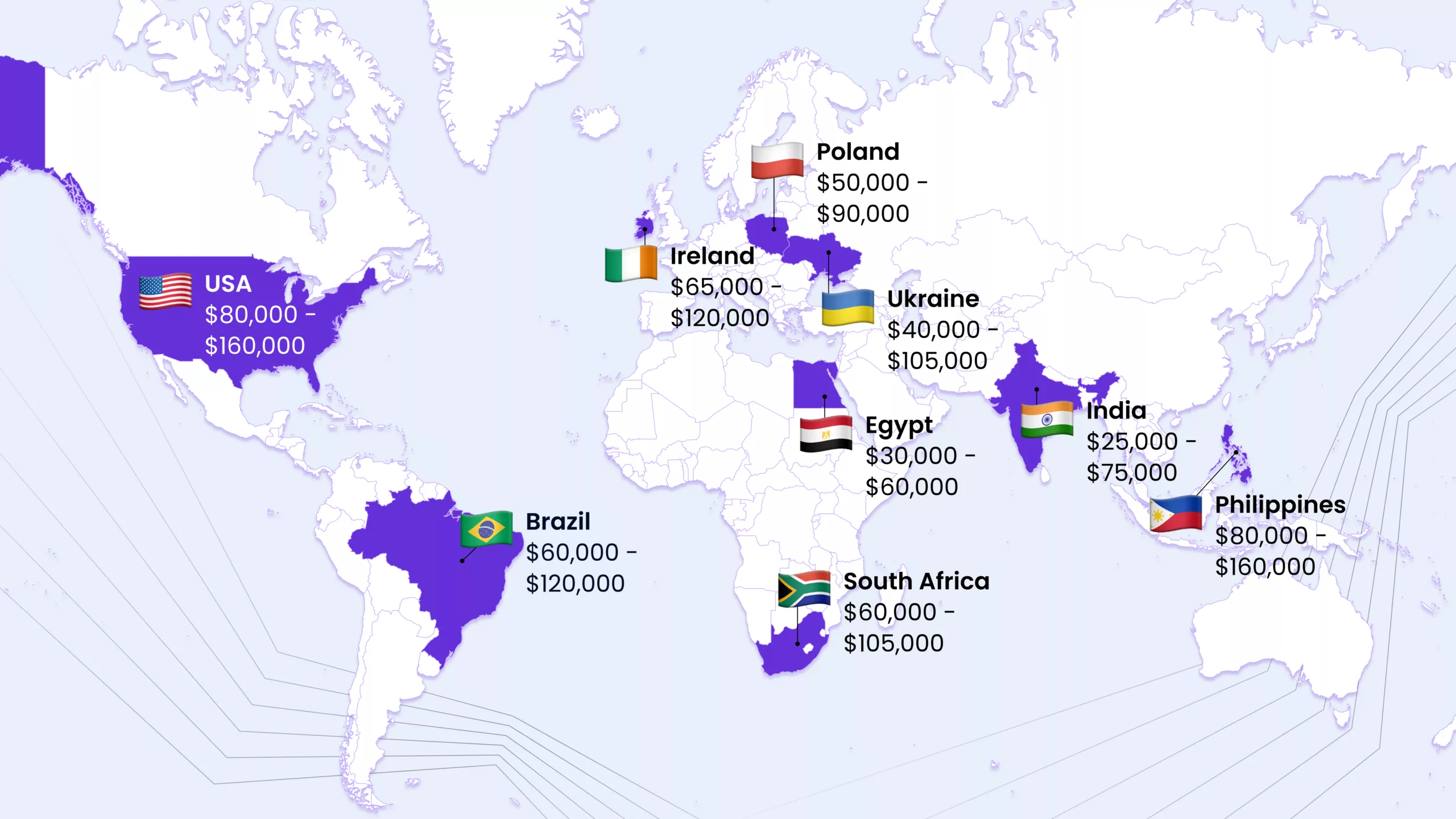
| USA | Ukraine | |
|---|---|---|
| Simple website | $500 – $3,000 | $200 – $1,500 |
| Basic website | $10,000 – $30,000 | $5,000 – $15,000 |
| Average website | $40,000 – $150,000 | $20,000 – $75,000 |
| Complex website | Over $150,000 | Over $75,000 |
| Feature | IT Outsourcing | Staff Augmentation |
|---|---|---|
| Cost | Generally less expensive | More expensive than outsourcing, similar to hiring temporary employees |
| Talent pool | Access to a global pool of talent | Limited to talent pool accessible for temporary positions |
| Control | Less control over the project and team | High level of control over the project and team |
| Communication | Potential for communication challenges due to time zones and cultural differences | Easier communication due to shared company culture and location |
| Scalability | Easily scale resources up or down as needed | Limited scalability; hiring and firing temporary staff can be time-consuming |
| Integration | May require additional effort to integrate the outsourced team with the existing team | Seamless integration with existing team |
| Suitability for | Well-suited for well-defined projects with specific skill requirements | Ideal for filling specific skill gaps within an existing team or for short-term projects |